Komei Quotes
Expel the barbarians, and so calm the indignation of the Mikado's divine ancestry.
The Emperor and many Japanese did not want foreign trading missions in the country. (see {613126}.) The problem at the time had nothing to do with the potential economic effects of trade on domestic industry or balance of payments, but for the Japanese was strictly a cultural problem. They were in great fear of what today some call “cultural imperialism”--the adoption of a foreign culture. The Japanese had been so fearful of cultural influence of foreigners that when some Japanese fishermen’s boat had been sunk and they had been rescued by foreign seamen and returned to Japan, they were executed as they had been “contaminated” and could “contaminate” the rest of the population. The government was in disarray ({613125}) and the military did not feel strong enough to take on the foreigners. Note the appeal of the line of Emperors of whom Komei was the 121st.
Komei, 1831-1867, Emperor (Mikado) of Japan, Message to the Military, ~1858
Sourced by: Eigen's Political and Historical Quotations

This quotation illustrates the disorganization of the Japanese Government at the time that the United States was attempting to force Japan to open the nation to trade. The Bakufu was a type of parallel government of the military. (It literally means “city of tents” and soldiers lived in tents.) The “Barbarians” were the Americans. The struggle between the civilian and military for governmental control has been ongoing in Japan for centuries until after the debacle of WWII with the Japanese militaristic government, Japan relegated the military to a minor role. But Japan’s Asian neighbors, who are familiar with Japanese History still worry about Japanese militarism.

Harris opened up trade with Japan for the United States. The problem at the time had nothing to do with the potential economic effects of trade on domestic industry or balance of payments, but for the Japanese was strictly a cultural problem. They were in great fear of what today some call “cultural imperialism”--the adoption of a foreign culture. The Japanese had been so fearful of cultural influence of foreigners that when some Japanese fishermen’s boat had been sunk and they had been rescued by foreign seamen and returned to Japan, they were executed as they had been “contaminated” and could “contaminate” the rest of the population.
The Emperor and many Japanese did not want foreign trading missions in the country. (see {613126}.) The problem at the time had nothing to do with the potential economic effects of trade on domestic industry or balance of payments, but for the Japanese was strictly a cultural problem. They were in great fear of what today some call “cultural imperialism”--the adoption of a foreign culture. The Japanese had been so fearful of cultural influence of foreigners that when some Japanese fishermen’s boat had been sunk and they had been rescued by foreign seamen and returned to Japan, they were executed as they had been “contaminated” and could “contaminate” the rest of the population. The government was in disarray ({613125}) and the military did not feel strong enough to take on the foreigners. Jiro was whipping up public opinion. He himself was decapitated by the government and his head exhibited as an example.

Until their defeat in WWII, most Japanese believed that the Emperor and the Nation itself was divine.

“Fain” in this context means “forced by circumstances.” Emerson was suspicious of the facts behind any issue about which all are being extremely patriotic.


3rd Earl Russell of Kingston


The French have for over 1000 years had a nationalistic ego that was, compared to other countries, very extreme. Highly nationalistic Frenchmen have almost always felt that the French were not proud enough of their exalted role in the history of human civilization. De Gaulle was the most extreme but Chevenement was not too far behind.


The only soldier ever so honored. He was then the Chief of Staff of the Army.

He had been asked about the so called American “atrocities” for the bombing of North Vietnam targets. For this response Denton was tortured even more than he had been before which he disclosed on the television by blinking his eyes in Morse Code spelling TORTURE.

Saloth Sar Pol Pot. He was responsible for the brutal killing of over 1 million of his own people.

Because of his anti-Vietnam War activities he was frequently accused of hating America.


This quotation is often incorrectly given as “Patriotism is the religion of Hell.”


Ford was a great admirer of Adolf Hitler who thought Ford was the greatest of the Americans. He was an inveterate Fascist—racism and all. He vehemently opposed United States entry into WWII against the Nazis. He was awarded a medal by Hitler, and he had no qualms about taking it.


His first gun invention was a machine pistol which he invented in a railroad depot.

Obama was the first sitting president to ever use the actual phrase. Others had talked about the concept but never used the words.

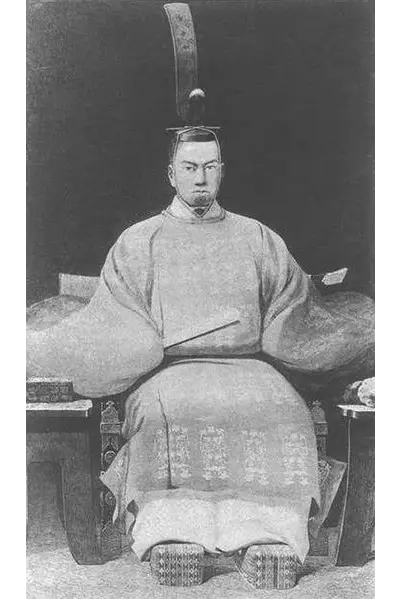
- Born: July 22, 1831
- Died: January 30, 1867
- Nationality:
- Profession:
Emperor Kōmei was the 121st Emperor of Japan, according to the traditional order of succession. Kōmei's reign spanned the years from 1846 through 1867, corresponding to the final years of the Edo period.
