Townsend Harris Quotes
We demand unrestricted trade between the merchants of both countries in all articles except gold and cereals, without any official interference.
Harris opened up trade with Japan for the United States. The problem at the time had nothing to do with the potential economic effects of trade on domestic industry or balance of payments, but for the Japanese was strictly a cultural problem. They were in great fear of what today some call “cultural imperialism”--the adoption of a foreign culture. The Japanese had been so fearful of cultural influence of foreigners that when some Japanese fishermen’s boat had been sunk and they had been rescued by foreign seamen and returned to Japan, they were executed as they had been “contaminated” and could “contaminate” the rest of the population.
Townsend Harris, 1804-1878, First United States Consul General to Japan, Statement to the Japanese Shogun’s Ministers, Yedo, November 1855
Sourced by: Eigen's Political and Historical Quotations

The Emperor and many Japanese did not want foreign trading missions in the country. (see {613126}.) The problem at the time had nothing to do with the potential economic effects of trade on domestic industry or balance of payments, but for the Japanese was strictly a cultural problem. They were in great fear of what today some call “cultural imperialism”--the adoption of a foreign culture. The Japanese had been so fearful of cultural influence of foreigners that when some Japanese fishermen’s boat had been sunk and they had been rescued by foreign seamen and returned to Japan, they were executed as they had been “contaminated” and could “contaminate” the rest of the population. The government was in disarray ({613125}) and the military did not feel strong enough to take on the foreigners. Note the appeal of the line of Emperors of whom Komei was the 121st.

The Emperor and many Japanese did not want foreign trading missions in the country. (see {613126}.) The problem at the time had nothing to do with the potential economic effects of trade on domestic industry or balance of payments, but for the Japanese was strictly a cultural problem. They were in great fear of what today some call “cultural imperialism”--the adoption of a foreign culture. The Japanese had been so fearful of cultural influence of foreigners that when some Japanese fishermen’s boat had been sunk and they had been rescued by foreign seamen and returned to Japan, they were executed as they had been “contaminated” and could “contaminate” the rest of the population. The government was in disarray ({613125}) and the military did not feel strong enough to take on the foreigners. Jiro was whipping up public opinion. He himself was decapitated by the government and his head exhibited as an example.


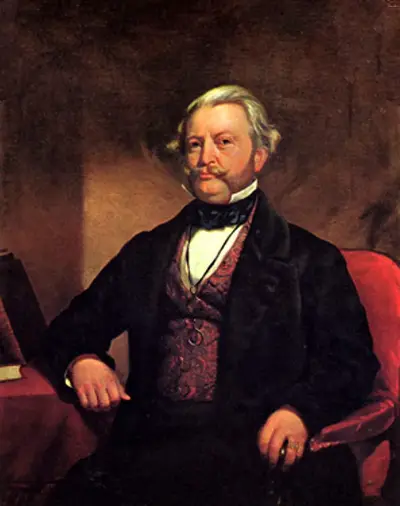
Townsend Harris was an American merchant and minor politician, and the first United States Consul General to Japan. He negotiated the "Harris Treaty" between the US and Japan and is credited as the diplomat who first opened Shogunate Japan to foreign trade and culture in the Edo period.
