Kakinomoto no Hitomaro Quotes
Japan is not a land where men need pray / For 'tis itself divine
Until their defeat in WWII, most Japanese believed that the Emperor and the Nation itself was divine.
Kakinomoto no Hitomaro, ~662-710, Japanese Poet, Quoted in Ernest Wilson Clement, A Short History Of Japan, 1915
Sourced by: Eigen's Political and Historical Quotations

The Emperor and many Japanese did not want foreign trading missions in the country. (see {613126}.) The problem at the time had nothing to do with the potential economic effects of trade on domestic industry or balance of payments, but for the Japanese was strictly a cultural problem. They were in great fear of what today some call “cultural imperialism”--the adoption of a foreign culture. The Japanese had been so fearful of cultural influence of foreigners that when some Japanese fishermen’s boat had been sunk and they had been rescued by foreign seamen and returned to Japan, they were executed as they had been “contaminated” and could “contaminate” the rest of the population. The government was in disarray ({613125}) and the military did not feel strong enough to take on the foreigners. Jiro was whipping up public opinion. He himself was decapitated by the government and his head exhibited as an example.

The Emperor and many Japanese did not want foreign trading missions in the country. (see {613126}.) The problem at the time had nothing to do with the potential economic effects of trade on domestic industry or balance of payments, but for the Japanese was strictly a cultural problem. They were in great fear of what today some call “cultural imperialism”--the adoption of a foreign culture. The Japanese had been so fearful of cultural influence of foreigners that when some Japanese fishermen’s boat had been sunk and they had been rescued by foreign seamen and returned to Japan, they were executed as they had been “contaminated” and could “contaminate” the rest of the population. The government was in disarray ({613125}) and the military did not feel strong enough to take on the foreigners. Note the appeal of the line of Emperors of whom Komei was the 121st.


This speech to over 100,000 people galvanized the Indian nationalists They had been asking the British to change the constitution to give India more independence. Churchill was opposed to any policy that would diminish the British Empire, but needed the Indians as men of India served in the British Army in every major theater of WWII. So instead of saying "No" Churchill held out the possibility but at a later time. He argued that it was inopportune to alter the Constitution in the midst of a world war.


“Fain” in this context means “forced by circumstances.” Emerson was suspicious of the facts behind any issue about which all are being extremely patriotic.


This quotation is often incorrectly given as “Patriotism is the religion of Hell.”


His belief is that the vast majority of Americans have a set of values in common including tolerance of alternative religions. In this sense, he considers the common values as an American Religion.

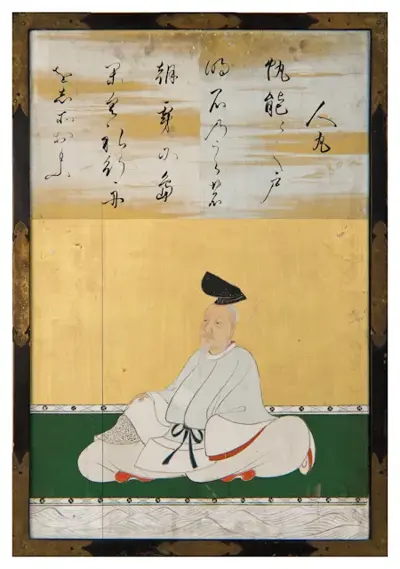
Kakinomoto no Hitomaro (柿本 人麻呂 or 柿本 人麿; c. 653–655 – c. 707–710) was a Japanese waka poet and aristocrat of the late Asuka period. He was the most prominent of the poets included in the Man'yōshū, the oldest waka anthology, but apart from what can be gleaned from hints in the Man'yōshū, the details of his life are largely uncertain. He was born to the Kakinomoto clan, based in Yamato Province, probably in the 650s, and likely died in Iwami Province around 709.
