Daniel Webster Quotes
Let our object be, our country, our whole country, and nothing but our country.
Daniel Webster, 1782-1852, U. S. Congressman (Federalist, NH & MA) & U. S. Senator (Federalist & Whig, MA), Address on Laying the Cornerstone of the Bunker Hill Monument, June 17, 1825
Sourced by: Eigen's Political and Historical Quotations

This is another example of a common practice amongst dictators and extremists of the Right and the Left. First they define “Patriotic” as accepting and following their norms, politics, regulations or laws. Then they define out any dissidents as not bona fide citizens of the nation. In the next step, the lack of citizenship and patriotism allows imprisonment, torture and even death at times. It is one thing to accuse dissidents as being citizens in opposition to the existing government; it is quite another to define them as no longer a citizen who is entitled to the respect or rights of a citizen. This was typical of both Soviet Communism in the 1950s and the followers of Senator Joseph p. McCarthy in the United States.


In 1924 Congress Voted a bonus for all veterans of World War I. However, the President vetoed the bonus with this infamous statement. Congress overrode Coolidge’s veto, and the bonus became law but the administration did not pay it then. Subsequent Congresses did not appropriate the money to pay the bonuses, and that led to the tragedy of the government attack on the Bonus Army in the midst of the Great Depression in 1932. See Quotation 643961.


Defending his opposition to a League of Nations. He was instrumental in preventing the United States from joining the League of Nations which President Wilson had worked so hard to create. The Senate never ratified the treaty which Wilson had signed.

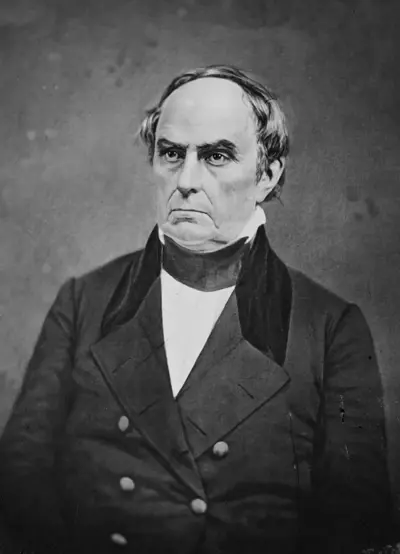
Daniel Webster was an American lawyer and statesman who represented New Hampshire and Massachusetts in the U.S. Congress and served as the U.S. Secretary of State under Presidents William Henry Harrison, John Tyler, and Millard Fillmore. As one of the most prominent American lawyers of the 19th century, he argued over 200 cases before the U.S. Supreme Court between 1814 and his death in 1852. During his life, he was a member of the Federalist Party, the National Republican Party, and the Whig Party.
