Paul W. S. Anderson Quotes
Every time I go to Japan and meet Capcom, it is like going to see the Umbrella Corporation. You ask them things, and they won't give you a straight answer about anything.
Anderson, Paul W. S. Interview. IGN, Ziff Davis, 2012.


This was the 14th part of the Japanese reply to a previously made American peace proposal. The Japanese policy was to unite all of Asia into a co-prosperity sphere controlled by Japan where Japan would militarily conquer those Asian countries which did not “voluntarily” want to join. The Japanese were in the process of conquering China and the United States and Britain had embargoed oil and other material to Japan trying to pressure them to withdraw their troops from China and cease Japanese conquest by force. Japan believed that it was their right to conquer and control Asia and it was beneficial to the region, and that the U. S. and Britain had no right to curtail the expansion that Japan required to assure raw materials and other necessities. At the very time that these negotiations were on going, the Japanese fleet was sailing for the sneak attack on Pearl Harbor. The attack took place the very day this part of the Japanese reply was received.

FDR was not always pro-British as many conservative opponents claimed. He was actually quite suspicious of the British though his concerns evaporated with the crisis of the rise of Hitler and WWII.


The final decision regarding the attack on Pearl Harbor and war with America had to be made. The Emperor Hirohito, Prime Minister Tojo, the full cabinet and leading elder statesmen were invited. Hara attended as one of the latter class. America had instituted an embargo of critical raw material whose end was contingent of Japan withdrawing from the territory that they had invaded and stop their territorial aggression in Asia, an aggression which some Japanese leaders—notably the military—was absolutely necessary to provide for the growing Japanese population and its increasing standard of living. At the time, an embargo was a powerfully effective weapon, which left Japan only two choices: Withdrawal or War. In modern times nations have chosen to endure and evade embargoes rather than be forced into undesirable positions.

In the Potsdam Declaration the Allies gave their demands for Japanese unconditional surrender. This was the Japanese reaction. The plans to drop the atomic bombs were then approved.


The President was spending all day and most of the evening with Japanese and Russian negotiators. He was trying to mediate an end to the Russo-Japanese War. Despite all the difficulties, Roosevelt found a new skill of personal international diplomacy. The war seemed intractable, but Roosevelt was able to get a peace treaty signed for which he was awarded the Nobel Peace Prize. It is doubtful that any modern president could spend so much concentrated time on an issue that was really not in the national interest of the United States. However, Roosevelt’s time and effort investment paid off in that by settling that dispute and getting nothing out of it for America or American business, the United States was in world opinion, elevated to a new status of fair, impartial and non-selfish international activity—a model that despite some lapses in later years, the United States has been unique.


Meiji the Great. This was a momentous event in Japanese history. This was the first time that the Japanese Emperor had appointed diplomats to conduct foreign affairs. Prior to that, Japan was so isolationist that at times Japanese who had any contact with Westerners would be executed. Then the Emperor had a reception for foreign diplomats. Never before in the history of the Empire had its divine head deigned to admit to his presence the despised foreigner. The Emperor was only in his second year of rule at the time.


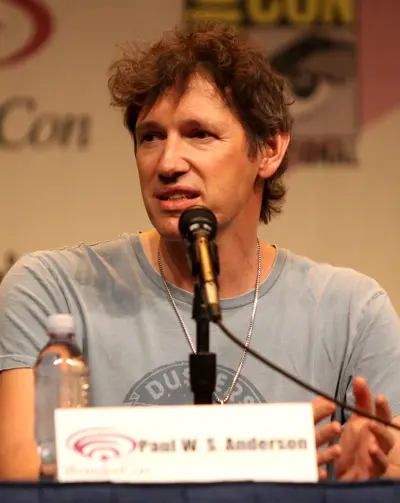
Paul William Scott Anderson is a British film director, producer, and screenwriter who regularly works in science fiction films and video game adaptations.
