J. William Fulbright Quotes
I'm sure that President [Lyndon] Johnson would never have pursued the war in Vietnam if he'd ever had a Fulbright [scholarship] to Japan, or say Bangkok, or had any feeling for what these people are like and why they acted the way they did. He was completely ignorant.
J. William Fulbright, 1905-1995, U. S. Senator (Democrat, AR), Chairman, Senate Foreign Relations Committee, Quoted in New York Times, June 26, 1986
Sourced by: Eigen's Political and Historical Quotations

He argued to take every statement or threat of violence against America or Americans made by a foreign leader, even if for local political purposes, as a clear and present danger that requires action, often including force to nullify that country's capability to harm America or to produce a regime change. Many point to Adolf Hitler who had, in Mein Kampf, told the world what he would try and do, and few paid any attention to him. On the other hand, when he was at his most dangerous and planning massive world aggression, his rhetoric was very moderate and peaceful. The vast majority of the foreign leaders who threaten America and her interests, never have acted on those threats. However, one danger is the incitement of others in the country or region who might become a threat to America as an individual or a non state terror group.


When Nixon was running for President in the 1968 Presidential campaign, he learned from Henry Kissinger that the Johnson administration had made an agreement with the Russians and North Vietnamese that America would stop the bombing of North Vietnam if there would be Peace Talks to end the Vietnam War. Nixon feard that although the polls showed him ahead of Vice President Humphrey, the announcement of ongoing peace talks would bring many of the anti-war Democrats who were not supporting Humphrey because of the Vietnam War out to vote for Humphrey to support the Peace Talks. Nixon decided to sabatouge the Peace Talks by persuading Vietnamese President Nguyen Van Thieu not to come to the peace table so there coulod be no talks. He accomplished this by having Anna Chennault, an extreme right-wing fund raiser who was the widow of General Chennault of Flying Tiger fame and who had connections with all the right wing politicans in Asia, get word to President Thieu that President Johnson would sell him out in the peace upcomming peace talks, and that if he would boycott the peace talks till after the American Presidential election, Nixon as the New Presidnt would be sure that Thieu would remain in control of South Vietnam or there would be no peace and America would continue the war until the North Vienamese would agree to a peace that kept Thieu in power. Earlier, Nixon had appointed Anna Chennault as the Offical Spokesperson of the Campaign on Asia. What Nixon did was a felony--private citizens are not alowed to intere with government negotiatons or descussions with foreign governments, under the Logan Act Many think that the action was legally Treason. Hoever, Nguyen VanThieu did boycott the peace talks despite all the entreaties of President Johnson and his administration. There were no peace talks and the public never even knew that there had been this attempt. The anti-Vietnam War voters mostly did not vote and Nixon won a close race. Shortly after the election, before Nixon could be sworn in, via the FBI Johnson learned of Chennault's activities but thee was no evidence to tie Nixon to the South Vietnam refusal to come to the peace table. It neever became a public issue although several leading politicians had learned what had really occured--see Quotation 664238. However, 0ver 40 years later, when Nixon's Chief of Staff's notes were finally made public, the smoking gun was dislosed and Farrell wrote this in his 2017 Biography of Richard Nixon. See Related Quotes for quotations from H. R. Haldman's hadnwritten notes of his phone call with Nixon, and other evidence that had also been uncovered.

Ironically, Lieberman was using this quotation to campaign against Bush’s son, George W. Bush.


Podharetz was citing the Vietnam war. The two American occasions where the plausibility seemed to fade were the Vietnam War and The Irag war. Both Presidents Lyndon Baines Johnson and George W. Bush as Bismarck predicted, had much political trouble over the wars.


It certainly did.


sending American troops to Vietnam


The candidates had remarkably little experience in foreign affairs with the exception of Jon Huntsman and Newt Gingrich who in the extreme right wing ideology driving the Republican primary voters at the time had little chance of winning as they were too far to the left for the Republicans of the time.

For over 50 years both the United States and Cuba had carried grudges about the Bay of Pigs, the boycott on purcuase of life saving medicine and U. S. attempts to assassiate Fidel Castro on the Cuban site, and the expropriation of Americans' Coban Prepoert, the poor record on human rights, the Mariel Boat Lift, and the harboring of American criminals for the United States. The policy positions held by the two nations had not produced anything constructive so the parties agreed to try and build closer ties. In just two years of a limited reproachment some progress had been made and Prices point about getting beyond the past tried to get all focussed on the future.

The Senate refused to ratify.

With Germany’s WWII history of military aggression, even over 60 years later, that country was very cautious about any use of military force and unilateral force was out of the question.


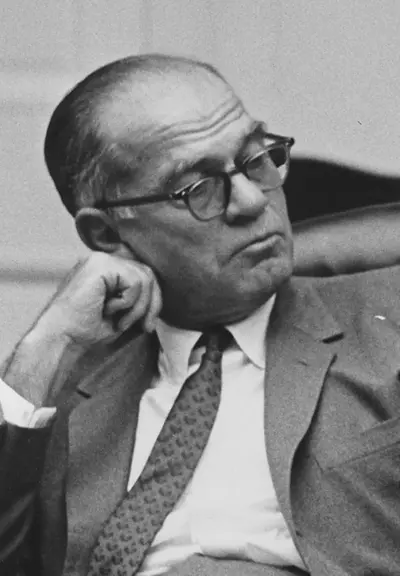
James William Fulbright was an American politician, academic, and statesman who represented Arkansas in the United States Senate from 1945 until his resignation in 1974. As of 2021, Fulbright is the longest serving chairman in the history of the United States Senate Committee on Foreign Relations. He is best known for his staunch multilateralist positions on international issues, opposition to American involvement in the Vietnam War, and the creation of the international fellowship program bearing his name, the Fulbright Program.
