William Robertson Smith Quotes
Even the highest forms of sacrificial worship present much that is repulsive to modern ideas, and in particular it requires an effort to reconcile our imagination to the bloody ritual which is prominent in almost every religion which has a strong sense of sin.
Smith, William Robertson. Lectures on the Religion of the Semites. Adam and Charles Black, 1889, p. 213.


Philip II, by this statement, and his subsequent behavior, made a major step forward in France for the separation of church and state. Previously, French kings played a major part in the selection of the bishops and other high clerics of the realm. Phillip ceased that type of interference. He did however, close down a religious commune for misbehavior, but that was at the request of both the church and civil authorities. See {617074} . The religious authorities at the time were delighted with this form of separation of church and state, but they were adamant that their church should be able to influence the monarchy and laws of the realm. In contrast today, the Chinese government does not allow any religion to interfere with the operation of the government, but insists that the Dali Lama and the Bishops of the Catholic church can only be appointed with their approval. Separation of church and state is a two way phenomenon.


This statement by The Prophet has been interpreted by Muhammad Abduh and other Islamic modernists and reformers as a call for co-existence and common ground between Muslims on the one hand and Christians and Jews on the other. However, some Muslim extremists interpret this sura to mean that the call is for the Christians and Jews to accept Islam and THEN there will be common words. There is in modern times, there is no Islamic Hierarchy like a Pope to make a definitive determination about such an interpretation so Muslims are split on the interpretation. In that sense Muslims today are like Protestants, Jews and Buddhists.


He was favoring state confiscation of land holdings in excess of four times the value of the standard land allotment. What is most interesting about this quotation is that the maximum ratio Plato would allow was 4 times the average. However in the 21st century, there were corporate executives being paid at 1000 times the averate wage with most conservatives believing that this (or any other ratio) was not excessive.


Samuel Langhorne Clemens, 1835-1910
Buddhists believe in reincarnation and by donating money they are attempting to secure a higher (and avoid a lower) station for themselves in the next life.

To modern readers this quotation is surprising in that Bryan is historically viewed as an extreme religious zealot. However, this was his mid-career and the extreme religious identification came later when he was out of office and made his living speaking to religious groups.
Observation after visiting the Mormons in Utah.

Constantine the Great. Roman Emperors saw Christians as their most dangerous foes. However, Constantine, with this edict, enabled Christianity to thrive and grow legally in the Western world. Later Constantine himself converted to Christianity. This edict ceased the vicious Roman persecution that Christians had endured.

Much of Western society, even in the 21st century has tended to distrust logic, reasonng and emperical research unless there was some kind of philosophical, religious, ethical or idological corroberation. Often science is rejected or ignored if its results do not conform with Westrern society's traditional values. Climate change and evolution are two of the more dramatic example of the continuing influence of the transcendentalists and religious fundamentalists.

Justifying his opulent lifestyle using the donated funds for a Rolls Royce, lavish homes, elegant clothing and a sleek houseboat. This was before he was exposed for embezzlement and fraud for which he went to prison
Describing the conquest and destruction of Jerusalem and the Second Temple in 70 AD.


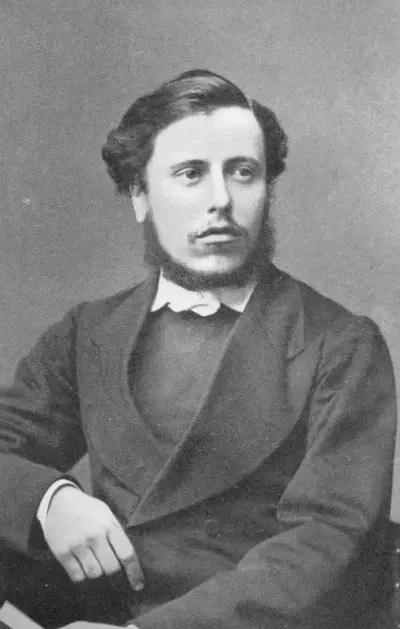
William Robertson Smith FRSE was a Scottish orientalist, Old Testament scholar, professor of divinity, and minister of the Free Church of Scotland. He was an editor of the Encyclopædia Britannica and contributor to the Encyclopaedia Biblica. He is also known for his book Religion of the Semites, which is considered a foundational text in the comparative study of religion.
