Plato Quotes
…consign the surplus to the state and its gods.
He was favoring state confiscation of land holdings in excess of four times the value of the standard land allotment. What is most interesting about this quotation is that the maximum ratio Plato would allow was 4 times the average. However in the 21st century, there were corporate executives being paid at 1000 times the averate wage with most conservatives believing that this (or any other ratio) was not excessive.
Plato, 427 BC -347 BC, Greek Philosopher, The Laws
Sourced by: Eigen's Political and Historical Quotations

Ironically the far right wing Fascists and the far left wing Communists agreed on this point: nationalization.


Previous governments had attempted to privatize the economy and sold off many of the nationally owned enterprises. Morales, a socialist, began reversing the cycle and “nationalized” the natural gas supply which is plentiful. Bolivia had been getting a very small percentage compared with world standards and Morales renegotiated the percentage for the government, but left the management in private hands. So in that sense he did not “nationalize” the hydrocarbons. The Bolivian mines represented another problem entirely. For years, featherbedding had created tens of thousands of unnecessary jobs for the mining, nut necessary to the people who were employed and the economy. But private operators always wanted to reduce the number of workers to only what was needed. So the nationalization problem was to increase the productivity of the Bolivian mines, maintain the exports of the mined products and maintain the employment---a difficult balancing act.

This book became the basic English textbook on socialism. Astoundingly, it sold over 2 million copies at a time when few books other than the Bible ever sold in that quantity. The fact that it was so popular alarmed many of the more conservative politicians of the day.

The first part of this quotation has defined the attitude of most Americans towards private enterprise and government since then. The second part of the quotation—the undesirability of public ownership of railroads has given way to the modern problem that no passenger railroad can be operated profitably by anyone—private or public. So Roosevelt’s “far-reaching disaster” was finally complete with the Federal Government taking over responsibility for Amtrack.

Spinoza’s ideas were considered so radical and dangerous that he was the only man in history who was excommunicated by the Catholics, the Jews and the Muslims. This quotation, in the 17th century outraged almost every cleric. This is one of the strongest and unequivocal statements about the desirability of separation of church and state. Interestingly, as early as this statement was, Spinoza believed that harm extended to both religion and government.


See John Leland for opposition to this clause: {608955}


Churchill detested Attlee both personally and for his political philosophy which was left wing especially favoring government nationalization of all large industry and business. Churchill walked into the very large men’s room and saw Attlee at a urinal and one end. Churchill, setting Attlee up, walked all the way to the other end of the row of urinals and began to use one there. Attlee commented that Churchill was appearing very standoffish to be urinating so far away. Churchill, then let loose with this repartee. See {620650} for another put down of Attlee.


1st Viscount Snowden. Nationalization is when a nation or state determines that certain industries of areas of the economy should be reserved for the government to operate. Private companies, if they have been operating a nationalized industry losse their rights to continue in that business and may even lose their physica assets in which case th form is supposed to be paid a fair price. In 21st century America we have very few nationalized industries. One of these is the manufacture of nuclear weapons. Communist counties have many if not most of the economy nationalized. From the 19th century socialism has evolved from a belief that most people will best be served by nationalization of most of th major economic functions. However, over time this did not meet Socialism’s other objectives and nationalism became less popular with socialists. Snowden, a leading socialist, wanted to get rid of the concept entirely, and today there are very few situations where there are calls for nationalis. Even the few remaining communist nations are privatizing (the opposite of nationalizing) some of their economy.

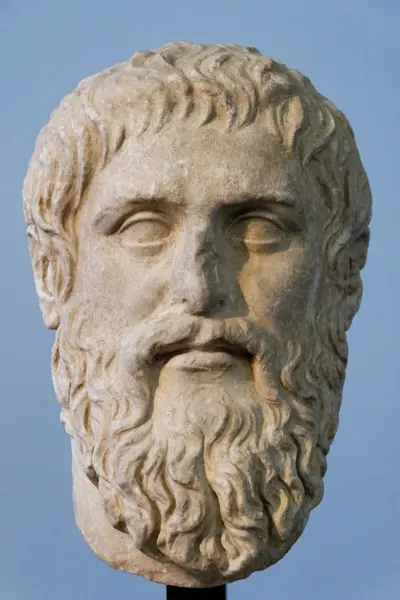
Plato (/ˈpleɪtoʊ/ PLAY-toe; Greek: Πλάτων Plátōn, pronounced [plá.tɔːn] in Classical Attic; 428/427 or 424/423 – 348/347 BC) was an Athenian philosopher during the Classical period in Ancient Greece, founder of the Platonist school of thought and the Academy, the first institution of higher learning in the Western world.
