Lillian Smith Quotes
Even its children know that the South is in trouble.
At the end of WWII Black Southern men, who had fought for America and seen many of their fellows killed, returned to a segregated, viciously racist South that was intellectually, educationally, scientifically, and culturally backward compared to the rest of the country. Radio from outside the South reached Southerners and TV was just starting. Yet the white establishment was determined to maintain the status quo.
Lillian Smith, 1897-1966, Writer, Reformer, & Political Activist, 1949
Sourced by: Eigen's Political and Historical Quotations


Historically, the Southern reaction to early 20th centry Civil Rights efforts was that it was the work of communist and anarchist radicals who were trying to destabilize America. When that argument began to be exposed as false, the next line of defense was that the southern Negro was perfectly happy in the segregated South, and the only problem was Northern liberals, black and white, who came to the South to foment trouble.


The letter was written in the supposed style of a Black after Emancipation and includes most of the ugly false stereotypes of the worst of the racists of the present and the slaveowners of past times. Williams stated that he was not a racist and was trying to make a point about freedom required risk and responsibility. However, the effort was interpreted by many people, Black and white, to be insulting and a put down of African Americans. At the same time, although most of the Tea Party members were not racists, most of the racists in America were supporters of the Tea Party. Those people interpreted the quotation as "telling it like it is" about Blacks who do not want the responsiblities and risks of freedom and are not yet developed sufficiently to be equal citizens in a democracy.
This quotation illustrates the Catch 22 dilemma that faces a minority. Black slaves were not allowed to marry and have formal families. After the Civil War racists warned against Blacks who had no respect for marriage monogamy end civil family life. See {619099} But when the slaves were freed and the ex slaves attempted to formalize and solemnize their marriages, they were castigated for that – acting like white people.

This quotation shows two important historical facts about Southern Racism. The first is now great the social pressures were against any white who would try and alter the status quo. The second was that none the less there have always been whites in the South who, despite the great social penalties, did the right thing and not only improved the situation, but more important, made most Americans realize that Southerners were not all racists any more than all of any group had any negative behavior.


Robert Allen Zimmerman


The rich whites won the class war by splitting the poor and working class with race hatred and then coopting one half—the poor whites so that neither the poor whites or blacks obtained much and even into the 21st century the poor of the American South were the worst off of all the poor in America.

At the time, racial discrimination was so rampant in America that when one of the units of Pepsi Cola, under the leadership of Walter Mack, hired Emmons to sell to Black communities, the Black residents of Northern communities were so unused to seeing Blacks in a “white collar” job, that they were treated as celebrities. Emmons and a few other black salesmen had incredible results yet despite that, the practice did not grow at the time as there were too many white executives who were so prejudiced that the practice was not increased after Mack retired. This short quotation paints a good picture of the nature of racial job discrimination in the North prior to WWII.

Following the lead of Arkansas, many southern schools were closed by order of the Governor when they received a court order to desegregate. Southern education was the poorest in the nation and the Southern students not able to go to school made the situation worse. Governor Almond changing his position realized that the cost of defying the Constitution and the courts was the ignorance of the students of the state, and became a major force persuading the state to integrate their schools. He is remembered for his leadership of desegregation and most people have forgotten that at the beginning of his term as governor he was as bad as most of the other Southern segregationist politicians.
Billy Sunday was the most famous preacher of the day. Unlike the vast majority of white preachers, he not only preached to black audiences but exuded an atmosphere of friendliness and comfort around Blacks that amazed most. Most Black leaders thought Sunday was very good for race relations, but there were some critics like Grimke. Sunday was castigated by many racist whites for preaching to Blacks, but he did not go as far as to condemn or preach against racism and the discrimination of the day and he would not preach to an integrated audience. See {585416} for another critique.


Qutb was studying at Greeley College and with some Egyptian friends want to a movie theater. Greeley, even though not in the South, practiced racial discrimination in many of their public accommodations and the Civil Rights Law would not be passed for another 15 years or so. The ticked clerk at first would not sell tickets to the dark skinned Egyptians and when one protested, the owner was called. He ruled that as long as they were not American Blacks, they could enter. But Qutb refused.
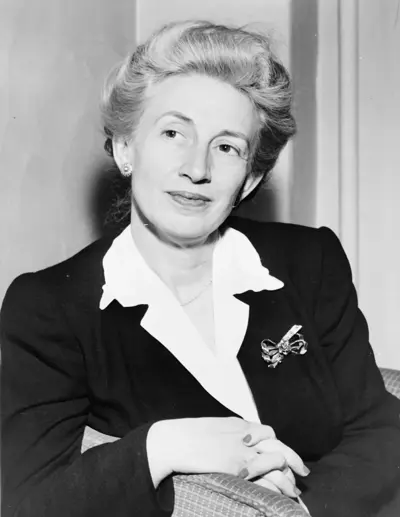
Lillian Eugenia Smith was a writer and social critic of the Southern United States, known most prominently for her best-selling novel Strange Fruit (1944). A white woman who openly embraced controversial positions on matters of race and gender equality, she was a southern liberal unafraid to criticize segregation and work toward the dismantling of Jim Crow laws, at a time when such actions virtually guaranteed social ostracism.
