Elizabeth Blackburn Quotes
Enlightened societies can only make good policy when that policy is based on the broadest possible information and on reasoned open discussion. Narrowness of views on a federal commission is not conducive to the nation getting the best possible advice.
As one of the few working scientists on the commission she provided much of the information on current science and unmasked some of the “junk science” that was presented by the committee staff. When the commission was asked to vote on a ban on all cloning including prohibiting stem cell research in conformity to President George W. Bush’s position, she led a majority voting against the ban. To salvage the situation, the Chairman then modified the proposed resolution to call for a 4 year moratorium on such research and get a narrow majority. Shortly thereafter Blackburn and two others who had had different views from the President were fired by the White House and replaced by three members whose views leaned in the opposite direction. See Commission Chairman Kass {611735} for the views that were acceptable to the White House.
Elizabeth Blackburn, Biologist, Member of the President’s Commission on Bioethics, “A Full Range of Bioethical Views Just Got Narrower,” The Washington Post, March 7, 2004
Sourced by: Eigen's Political and Historical Quotations

Kass was appointed for his religious, anti abortion views and he is an excellent proponent of one perspective. There are others who do not necessarily see human cloning in such a dark light. Although, the process has to be developed, at some time it well might be a mode by which infertile people could have children. Kass’s criticisms were made by others when in vitro fertilization techniques were being developed.


Referring to scientific and technological public policy issues such as the Space Defense Initiative, popularly known as "Star Wars"


His major facilities are located in Rockville, Maryland in the “Biotechnology Corridor” which is 10 minutes from the National Institutes of Health, the Surgeon General’s Office, the Food & Drug Administration and 40 minutes to the White House or Capital Hill.


Even today, the lack of logic in many fields—especial politics and public policy—has caused an intellectual and emotional rift between scientists and many in government. Bush was one of the great scientists and thinkers in American history. He had advised FDR to go ahead with the research and development program to try and develop an atomic bomb. He was the only Government Official who Roosevelt discussed the idea with. At the time, Bush as a government official supervised and directed many thousands of scientists, and was one of just a few scientists who monitored and advised on the Manhattan Project to develop the Bomb.


- Born: November 26, 1948
- Nationality: Australian
- Profession: Scientist
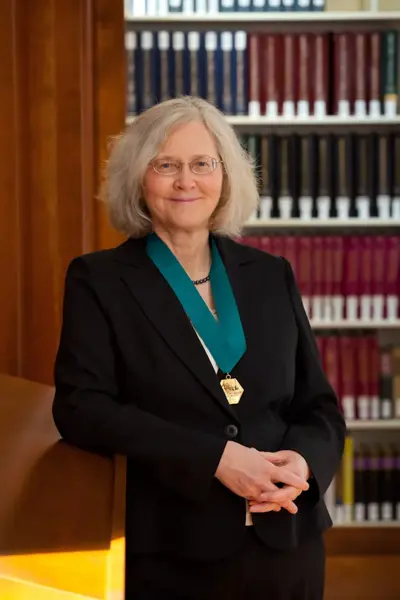
Elizabeth Helen Blackburn, AC FRS FAA FRSN is an Australian-American Nobel laureate who is the former President of the Salk Institute for Biological Studies. Previously she was a biological researcher at the University of California, San Francisco, who studied the telomere, a structure at the end of chromosomes that protects the chromosome. In 1984, Blackburn co-discovered telomerase, the enzyme that replenishes the telomere, with Carol W. Greider. For this work, she was awarded the 2009 Nobel Prize in Physiology or Medicine, sharing it with Greider and Jack W. Szostak, becoming the first Australian woman Nobel laureate. She also worked in medical ethics, and was controversially dismissed from the Bush Administration's President's Council on Bioethics.
