George E. P. Box Quotes
Remember that all models are wrong; the practical question is how wrong do they have to be to not be useful.
George Edward Pelham Box, Mathematician & Mathematical Modeler, George E.p. Box and Norman R. Draper, Empirical Model-Building and Response Surfaces, 1987
Sourced by: Eigen's Political and Historical Quotations


This is a reference to mathematical models.


See {630694} for a later, more specific instance where Hand’s principle was required operationally.


As one of the few working scientists on the commission she provided much of the information on current science and unmasked some of the “junk science” that was presented by the committee staff. When the commission was asked to vote on a ban on all cloning including prohibiting stem cell research in conformity to President George W. Bush’s position, she led a majority voting against the ban. To salvage the situation, the Chairman then modified the proposed resolution to call for a 4 year moratorium on such research and get a narrow majority. Shortly thereafter Blackburn and two others who had had different views from the President were fired by the White House and replaced by three members whose views leaned in the opposite direction. See Commission Chairman Kass {611735} for the views that were acceptable to the White House.


The Labor Department never would commit to a recommendation. The Job Corps leadership examined the insufficient data and made their best guess which for the most part turned out to be right as the Job Corps was the most effective youth job training program in the history of the country. It and Head Start were the only two of the anti-poverty programs that were still operational into the 21st century. Supreme Court Justice Learned Hand expressed the same idea more generally in {482001}.

They try to persuade potential customers that trying to predict the future and invest accordingly as not a very good strategy as predictions of all kinds are notoriously foggy.
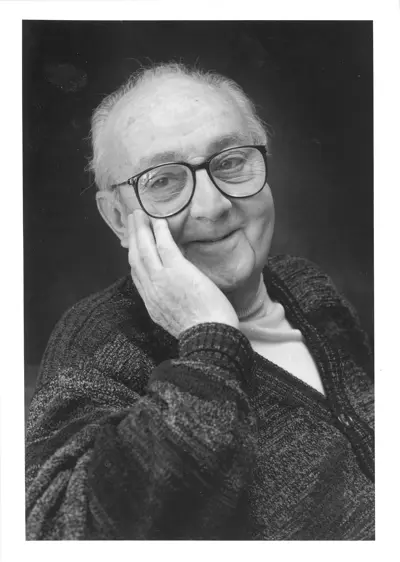
George Edward Pelham Box FRS was a British statistician, who worked in the areas of quality control, time-series analysis, design of experiments, and Bayesian inference. He has been called "one of the great statistical minds of the 20th century".
