Charles William Eliot Quotes
Do not underestimate the importance of Islam on the continent of Africa.
This was one of the sagest pieces advice regarding Islam given in the early 20th century.
Charles W. Eliot, 1834-1926, President, Harvard University, Letter to W. E. B. DuBois
Sourced by: Eigen's Political and Historical Quotations


All modern legal systems conflict in some respects with a literal interpretation of the Koran which is the basis for the traditionalists view of Sharia—Islamic law. Therefore a student of modern law is learning things which go against Sharia as interpreted by fundamentalists. There was a time when Jewish and Christian American religious families were uncomfortable with studding modern law as there were contradictions with Biblical law. There are still a few.

This quotation is important because it emphasizes an aspect of freedom of religion that is not usually discussed—the freedom to LEAVE a religion. As an Islamic reformer born in Iran, this notion is extremely important. Under Sharia—Islamic Law—capital punishment is required for anyone who converts from Islam to any other religion. This has been made a part of the civil law of many Islamic nations from Afghanistan to Saudi Arabia as well as Iran where Sharia IS the civil law. There is no other religion in the world which makes conversion away from the religion a capital crime requiring execution. Executing people who leave a religion is a major violation of the Universal Declaration of Human Rights.
This phrase has been used by fundamentalists to justify forced conversion and the imposition of religious law—Sharia—on believers and unbelievers alike. The logic is that if God says believing orthodox Mosems are the best, that is what he wants for all. And therefore by forcing others to be orthodox and of the faith, one is doing God’s bidding. See Husain Haqqani, “Islam’s Medeval Outposts,” Foreign Policy November/December, 2002.

Traditionally Islam was a religion of faith and since it was spread to illiterate and uneducated people, it was dogmatic and literal. Reason and logic was not a part of the theology originally. As Islamic societies developed intellectually, the theology matured and reason and logic was overlaid from the science and the technology to the religion. There were many very sophisticated philosophers and theologians until Islam closed intellectually and went into its decline. Just as there were few Islamic scientists and philosophers during the Enlightenment there were few theologians who appreciated the role of logic. Those few, like Abduh, had to become reformers and modernists and return to the era when Islam was as more modern than Christianity and most other religions.


This is often referred to as the “prophetic mission.” This line appears on most Muslim coins and some monuments.

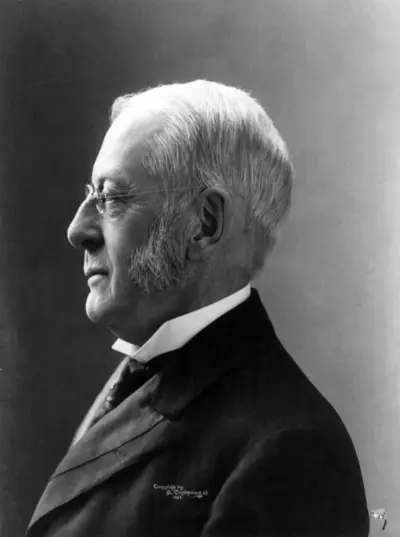
Charles William Eliot was an American academic who was selected as Harvard's president in 1869. A member of the prominent Eliot family of Boston, he transformed the provincial college into the pre-eminent American research university. Eliot served until 1909, having the longest term as president in the university's history.
