Muhammad Abduh Quotes
I went to the West and saw Islam, but no Muslims; I got back to the East and saw Muslims, but not Islam.
Muhammad Abduh, 1849-1905, Egyptian jurist, historian, political scientist, religious scholar and liberal reformer, Mufti of the Egyptian Realm, Editor and Chief of al-Waqāʾiʿ al-Miṣriyya (The Eyptian State Newspaper), Known as “The founder of Islamic Modernism”
Sourced by: Eigen's Political and Historical Quotations

This was a remarkable public statement for its time. No other political leader of an Islamic country would dare claim that people have a right to be atheists. Very few would even suggest that people should be free to choose their own religion.


The Guru was then horribly tortured, and when he still would not convert, the Emperor had him beheaded. A new Indian Emperor, Aurangzeb, had ascended the throne of India by imprisoning his father and murdering his brothers. All the Emperors in those days were Muslims ever since the Islamic army had left Arabia and conquered most land to the East including most of India. Aurangzeb was worse than most and claimed he had a vision from God telling him that he should make everyone in the kingdom a Muslim. But about half the population was still Hindu. He decided to get the Sikh Guru to convert and then almost all would follow. The Sikhs were considered a Hindu sect at the time, and the Sikh Guru was respected by most Hindus. When the Emperor sent for the Guru, he explained that India should only have one religion, Islam, and offered the Guru much gold to convert, but if he did not do so, it would go badly for him. The Guru asked that a large pile of peppercorns be brought before them, and had it set on fire. When the fire burned out, the Guru went through the ashes and found three peppercorns intact.


This quotation illustrates that a narrow orthodox view of Islam is not the only one in Arab nations. Khaled is not an obscure cleric, but a popular television personality. While his views are considered heresy by many orthodox Muslims, the narrow view is by no means universal. Orthodox Islamists believe that God has commanded that all mankind be Muslims and the ones who are not are either ignorant so need to be “educated”, or evil and therefore should be killed. However, Muhammad ordained that an exception should be made for “Children of the Book”—Jews and Christians who revere the Old Testament. This was at a time when Christians would not allow any other form of worship but Christianity. Christianity, Judaism and most other religions have become tolerant of other religions and allow open alternative worship. Islam which early on led the way to tolerance, has in many countries gone back to the intolerance that existed amongst many Christians at the time of Muhammad.

In one of the historical ironies of the 12th century, a Christian sect preferred the rule of the Muslims than their Christian brethren—on the grounds of religious tolerance. It illustrates the changes that take place over time. By the 21st century, it was the Christians who were thought of as tolerant and the Muslims as the opposite.

Ahmad denied saying this although the reporter who wrote the original story insists that he did and she wrote it down at the time. Ahmad did not deny the statement when it first appeared in the Fremont Argus, but only did so several years later.


While not in the Koran, this attributed statement is the basis for the ban on non-Muslims going on a Hajj and going to the most holy Muslim places—Mecca, Mina, Muzdalifa, and Arafat as well as the anti-religious hostility to all religions but Islam which is present in some Muslim countries.
Some Muslims refer to Christians as polytheists because of the concept of the Trinity. To them this is worshipping more thn one God. The Roman Catholic practice of praying to the Virgin Mary is another exmple for them.
The Prince had given $20 million to American Universities to establish Islamic Studies programs however. The Muslim religion requires believers to proselytize and spread the faith, while Saudi and Islamic law prohibits any other faith from being public or promoted. It is illegal, for example, to even bring a Christian Bible into the Kingdom. During the Gulf War, American soldiers defending Saudi Arabia were not allowed to bring in their religious texts unless they were Muslims.
In some countries political candidates run on religious platforms to convert the part of the population that is not of their religion and turn the nation into a theocracy.

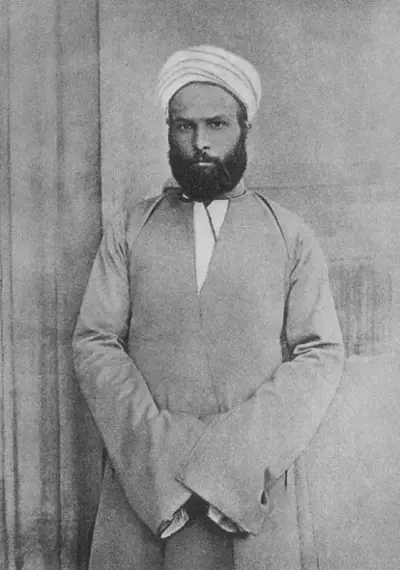
Muḥammad 'Abduh (also spelled Mohammed Abduh, Arabic: محمد عبده) was an Egyptian Islamic scholar, jurist, theologian, mujaddid, Freemason, and writer. He also wrote, among other things, "Treatise on the Oneness of God", and a commentary on the Quran. He briefly published, alongside Jamāl al-Dīn al-Afghānī, the Pan-Islamist anti-colonial journal Al-Urwah al-Wuthqa.
