John Hanning Speke Quotes
Cows, after leaving the low lands near the coast, are found to be plentiful everywhere, and to produce milk in small quantities, from which butter is made.
Speke, John Hanning. Journal of the Discovery of the Source of the Nile. William Blackwood and Sons, 1863, p. xx.


Afghan and Pakistan share a long border of difficult terrain and have had formal and informal relationships for centuries. There is suspicion on both sides and insults to the other have been part of the culture for years.


The notion that public lands should be available for the grazing of private herds of animals is very old. Note that the Roman law expressly forbade the collection of fees for grazing rights. The reasoning was that virtually all free Romans had animals that needed grazing and pasture land. So all citizens could take advantage of the public facility. As society became more industrialized and specialized, the percentage of citizens who could benefit reduced over time until there became less than 1 percent of citizens who could benefit from a asset that was paid for and maintained by all citizens. Then there was a rationale for charging user fees.


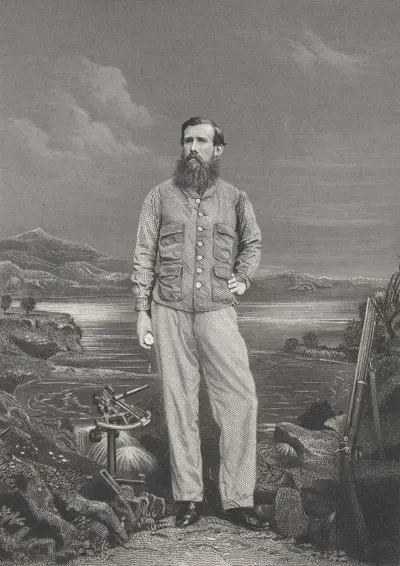
John Hanning Speke was an English explorer and officer in the British Indian Army who made three exploratory expeditions to Africa. He is most associated with the search for the source of the Nile and was the first European to reach Lake Victoria (known to locals as Nam Lolwe in Dholuo and Nnalubaale or Ukerewe in Luganda). Speke is also known for propounding the Hamitic hypothesis in 1863, in which he supposed that the Tutsi ethnic group were descendants of the biblical figure Ham, and had lighter skin and more Hamitic features than the Bantu Hutu over whom they ruled. The racial hypothesis he proposed contributed to the conditions for the 1994 Rwandan genocide, in which 500,000 to 600,000 Tutsi were slaughtered.
