Tiberius Sempronius Gracchus Quotes
Cattle, horses, mules, asses... may be pastured on this land or place which is public property of the Roman people, … nor need anyone be charged tax or rental for this privilege.
The notion that public lands should be available for the grazing of private herds of animals is very old. Note that the Roman law expressly forbade the collection of fees for grazing rights. The reasoning was that virtually all free Romans had animals that needed grazing and pasture land. So all citizens could take advantage of the public facility. As society became more industrialized and specialized, the percentage of citizens who could benefit reduced over time until there became less than 1 percent of citizens who could benefit from a asset that was paid for and maintained by all citizens. Then there was a rationale for charging user fees.
Tiberius Sempronius Gracchus, ~168 BC – 133 BC, Tribune of Rome, Agrarian Law; 111 B.C.
Sourced by: Eigen's Political and Historical Quotations

The Bedouin live by their flocks without which they have little material existence.


Withdrawal meant not allowing certain public land to be sold or allotted to homesteading, commercial development, mining, industrial, ranching, or agricultural use. It was reserved as wilderness areas and/or national parks or forests.


This is one of the earliest codifications of grazing rights. Note that the free grazing privilege only applied to small herds. For more than 10 adult animals there were fees. The issue of grazing rights and fees is still debated. The principle was extended to smaller animals such as sheep and goats, but the maximums increased.


Slaves could not own property in most of Southern America. The Greeks, the Romans, the ancient Germans, the Poles, the Portuguese, the Spanish and the French had provided, both by law and by custom, for the possession of property by the slave, which could, not be seized by his master. This is another sense in which American slavery was even worse than most slavery had been.


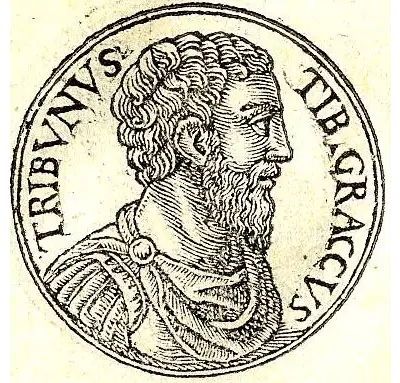
Tiberius Sempronius Gracchus (163/162–133 BC) was a populist Roman politician best known for his agrarian reform law entailing the transfer of land from the Roman state and wealthy landowners to poorer citizens. Against stiff opposition in the aristocratic Senate, this legislation was carried through during his term as tribune of the plebs in 133 BC. Fears of Tiberius's populist programme, as well as his uncompromising behavior, led to him being killed, along with many supporters, in a riot instigated by his senatorial enemies. A decade later his younger brother Gaius attempted similar legislation and suffered a similar fate.
