James Hogg Quotes
Without the shepherd's dog, the whole of the open mountainous land in Scotland would not be worth a sixpence.
Hogg, James. "The Shepherd's Dog." The Shepherd's Calendar, vol. 2, William Blackwood, 1829, p. 297.


The Bedouin live by their flocks without which they have little material existence.

Slogan of British land reform movement led by Collings against the ministry of Lord Salisbury and in favor of Joseph Chamberlain.


The notion that public lands should be available for the grazing of private herds of animals is very old. Note that the Roman law expressly forbade the collection of fees for grazing rights. The reasoning was that virtually all free Romans had animals that needed grazing and pasture land. So all citizens could take advantage of the public facility. As society became more industrialized and specialized, the percentage of citizens who could benefit reduced over time until there became less than 1 percent of citizens who could benefit from a asset that was paid for and maintained by all citizens. Then there was a rationale for charging user fees.
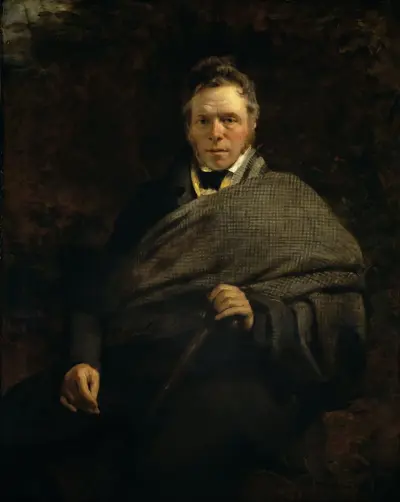
James Hogg was a Scottish poet, novelist and essayist who wrote in both Scots and English. As a young man he worked as a shepherd and farmhand, and was largely self-educated through reading. He was a friend of many of the great writers of his day, including Sir Walter Scott, of whom he later wrote an unauthorised biography. He became widely known as the "Ettrick Shepherd", a nickname under which some of his works were published, and the character name he was given in the widely read series Noctes Ambrosianae, published in Blackwood's Magazine. He is best known today for his novel The Private Memoirs and Confessions of a Justified Sinner. His other works include the long poem The Queen's Wake (1813), his collection of songs Jacobite Relics (1819), and his two novels The Three Perils of Man (1822), and The Three Perils of Woman (1823).
