Robert Grosseteste Quotes
Know that each acre of fallow ought to support yearly two sheep at the least, then a hundred acres of fallow can support two hundred sheep, two hundred acres, four hundred sheep and so on.
Grosseteste, Robert. "The Rules of Saint Robert." Walter of Henley's Husbandry, translated by Elizabeth Lamond, Longmans, Green, and Co., 1890, pp. 121-145.


The Bedouin live by their flocks without which they have little material existence.

The notion that public lands should be available for the grazing of private herds of animals is very old. Note that the Roman law expressly forbade the collection of fees for grazing rights. The reasoning was that virtually all free Romans had animals that needed grazing and pasture land. So all citizens could take advantage of the public facility. As society became more industrialized and specialized, the percentage of citizens who could benefit reduced over time until there became less than 1 percent of citizens who could benefit from a asset that was paid for and maintained by all citizens. Then there was a rationale for charging user fees.


inefficient crop yields per acre


Environmentalists counter with the fact that the corporate and government interests in growth at any cost will, and have in the past, found a loophole in every reasonable compromise that has been made. Reasonableness is only a device they use to slow regulation until they can either figure out a loophole or use their great fiscal resources to shape public thinking to soften or eliminate the regulation. Therefore some environments argue that they must be as ideological about the environment as the corporations are about their rights to profit and not compromise even when a compromise appears reasonable. Besides, if the corporations always appear to win, the public will think opposing them is futile. So when they can be beaten on something that is unreasonable, they appear weaker and encourage more environmental public activism.


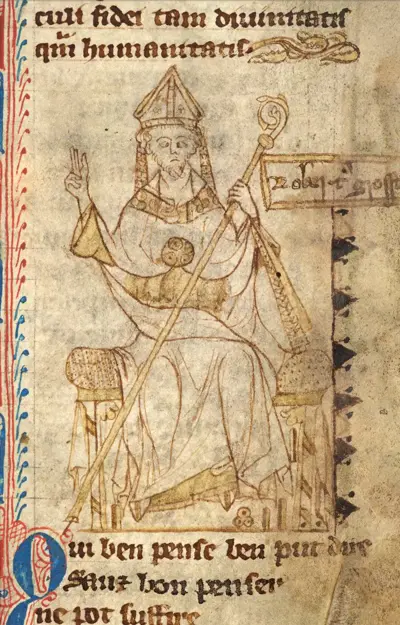
Robert Grosseteste was an English statesman, scholastic philosopher, theologian, scientist and Bishop of Lincoln. He was born of humble parents in Suffolk (according to the early 14th century chronicler Nicholas Trevet), but the associations with the village of Stradbroke is a post-medieval tradition. Upon his death, he was almost universally revered as a saint in England, but attempts to procure a formal canonisation failed. A. C. Crombie called him "the real founder of the tradition of scientific thought in medieval Oxford, and in some ways, of the modern English intellectual tradition".
