John Stuart Mill Quotes
When the land is cultivated entirely by the spade and no horses are kept, a cow is kept for every three acres of land.
Mill, John Stuart. Principles of Political Economy. John W. Parker, 1848, Book II, ch. 6.


Slogan of British land reform movement led by Collings against the ministry of Lord Salisbury and in favor of Joseph Chamberlain.


Environmentalists counter with the fact that the corporate and government interests in growth at any cost will, and have in the past, found a loophole in every reasonable compromise that has been made. Reasonableness is only a device they use to slow regulation until they can either figure out a loophole or use their great fiscal resources to shape public thinking to soften or eliminate the regulation. Therefore some environments argue that they must be as ideological about the environment as the corporations are about their rights to profit and not compromise even when a compromise appears reasonable. Besides, if the corporations always appear to win, the public will think opposing them is futile. So when they can be beaten on something that is unreasonable, they appear weaker and encourage more environmental public activism.

Some opponents of genetic engineering and Xenotransplantation (creating new animals by combining parts of different animals or adding parts of one animal species to another) cite this Biblical passage in their efforts to stop these new technologies. Yet both are well established and most people, including the opponents often do not even realize instances of it. For example, a large proportion of heart valve repairs in humans is accomplished by Xenotransplantation—replacing the defective heart valve with a pig heart valve. An entire line of biological research is being conducted by splicing the genes of a jellyfish that glows green under UV light into monkeys and worms to study the methods of genetic transmission.

inefficient crop yields per acre


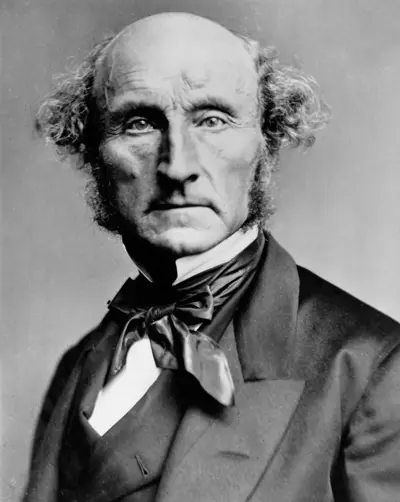
John Stuart Mill, usually cited as J. S. Mill, was an English philosopher, political economist, Member of Parliament, and civil servant. One of the most influential thinkers in the history of classical liberalism, he contributed widely to social theory, political theory, and political economy. Dubbed "the most influential English-speaking philosopher of the nineteenth century", he conceived of liberty as justifying the freedom of the individual in opposition to unlimited state and social control.
