Mississippi Quotes
A … fine is imposed upon any master convicted, of permitting his slave to keep livestock of any description
Slaves could not own property in most of Southern America. The Greeks, the Romans, the ancient Germans, the Poles, the Portuguese, the Spanish and the French had provided, both by law and by custom, for the possession of property by the slave, which could, not be seized by his master. This is another sense in which American slavery was even worse than most slavery had been.
Mississippi, Law Passed January 29, 1825
Sourced by: Eigen's Political and Historical Quotations

Butler was at the time the Union general in charge of Louisiana. He had on his hand a large group of slaves whose owners had abandoned the area. There was no emancipation yet. He wrote for instructions. The result was the first actual emancipation of slaves.


The perception of the necessity of slavery was evident very early in the South.


There was little thought of emancipating slaves or their value to the South by the senior officers of the Union Army at the beginning of the war. The Secretary of War however changed that. See {629184}.

This was one of the several early unofficial Emancipations that was issued in the Civil War.


Negotiations regarding the exchange of prisoners and property. This was his view of his supposed obligation to return Negro slaves who had escaped and gone to the British during the war. The treaty of peace specified that all “property” including slaves, taken by, the British be returned to the Americans. But he and other officers did not always do so as they thought they had higher moral obligations. See {621936} for example.

There was a fear of free Blacks gambling which did not extend to whites as there was much gambling at the time.

It is not known what actually happened thereafter. However, from the intensity of this letter, it is likely that unless Rice was killed or wounded in battle, he went to get his daughter and deal with her “owner”. An interesting side note is that the slave owner actually sent the letter to the Commanding Union General Rosecrans complaining. The mental set of Southern Slave Owners was incredible to us today, but that is one of the reasons that Reconstruction was so difficult. Southerners could not see anything that they did that was wrong. Unfortunately, there are a few racist people with those views still in America plus many throughout the world.
He was the Russian Reformer who ended serfdom and gave land to the peasants and then was assassinated. Ironically, both Alexander II and Lincoln were assassinated—because of their reform efforts—Lincoln for going too far; the Czar for not going far enough. See the Nickname that was given to the Czar: {622809}.
The early laws regarding slaves were more protective in earlier Colonial America than they were after independence. In Colonial America all local laws and the enforcement thereof were subject to the government and king of England. When the Constitution was passed with the understanding that Slavery issue was not to be even discussed in Congress, there was NO OUTSIDE ENTITY to check any laws or lack of laws or the enforcement thereof. The Southern States were a law unto themselves on the slavery issue and the system became even more brutal and cruel with no moderating force. When such a force seemed close with the Republican 1860 victory, the South seceded. Then war was the moderating force.


Since a slave was not a person, he/she could not accept any gifts or own any property. They were themselves property. The Greeks, the Romans, the ancient Germans, the Poles, with the Portuguese, the Spanish and the French had provided, both by law and by custom, for the possession of property by the slave, which could, not be seized by his master. This is another sense in which American slavery was even worse than most slavery had been.

The other Southern States had similar legal principles while still maintaining the hypocrisy that their legal system was grounded on Christian morality.

Brigham Young, the Mormon Leader and Territorial Governor, was strongly opposed to Interracial sex. See {629150}. An earlier clause provided for loss of the rights to a slave if the master had sexual relations with the slave, something that no Southern State had ever done.


Note that even in the marriage ceremony where the couple pledges fealty to each other, the intrusion of this pledge of loyalty and obedience to the Master.

Lincoln, just before the Civil War, quoted Jefferson that if slavery were not ended in America the results would be disastrous. But Lincoln at the time probably did not imagine how right Jefferson was, and Jefferson himself probably 1 how terrible the Civil War would be.

As a key member of Lincoln’s cabinet, William H. Seward was most concerned with preserving The Union. However, since the Constitution was written in 1787, there had been compromises made with the pro slavery forces of the South to give them proportionally more political power and to avoid interfering with the institution of slavery. The Dred Scott Supreme Court decision forced the Northern States to actively cooperate in enforcing and maintaining slavery. Large numbers of abolitionists had reached their limit and wanted no more compromises regarding slavery. Mrs. Seward was one of those. This quotation also illustrates the influence that some women had in politics even though women could not vote. Frances Seward was very much a political partner with her husband who was favored to beat Lincoln for the Republican Presidential nomination.

Like so many of his other predictions about America, he saw that the evil of racism and slavery was bound to cause the nation to implode. And this was decades before the Civil War, but the problem was inescapable to a critical observer like de Tocqueville.

He was also himself a ship owner in the slave trade and he was the brother of the leading Rhode Island abolitionist, Moses Brown. See {585793}. Brown became the first American, prosecuted in federal court for illegal slave trading –-- a prosecution brought, in part, by his own brother. He was, however, acquitted.
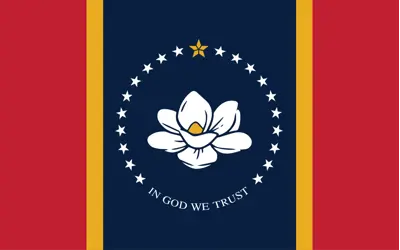
Mississippi (/ˌmɪsɪˈsɪpi/ (listen)) is a state in the Southeastern region of the United States, bordered to the north by Tennessee; to the east by Alabama; to the south by the Gulf of Mexico; to the southwest by Louisiana; and to the northwest by Arkansas. Mississippi's western boundary is largely defined by the Mississippi River. Mississippi is the 32nd largest and 34th-most populous of the 50 U.S. states. Jackson is both the state's capital and largest city. Greater Jackson is the state's most populous metropolitan area, with an estimated population of 580,166 in 2018.
