David Wilmot Quotes
Congress would exclude slavery from any territory that in the future might be acquired from Mexico.

Until the Civil War, every territorial issue in American politics was colored by the slavery question. The South, even with its advantage of counting slaves as three-fifths of a person was inexorably losing proportional Congressional strength as the growth rate of the free states was much greater. So there would be a pro-slavery movement in every new territory. Wilmot and others were determined that after slavery had been outlawed for two decades in California before the territory became affiliated with the United States, that slavery not be reintroduced which is just what the Southern pro-slavery forces were trying to do. The amendment passed handily in the House but was killed in the Senate where Southern strength was proportionately stronger.

This quotation is often given by those who argue that Lincoln really did not care about the slavery issue. It is a terrific example of the limitations of quotations where there is artful rhetoric. Douglas, had in the 1st debate posed 7 “interrogatories” to Lincoln asking if he were pledged to certain positions regarding slavery. Douglas was trying to associate Lincoln with the most radical abolitionists in the land. By asking if Lincoln were pledged to the positions, Douglas thought that he had cornered Lincoln. For if Lincoln denied the pledges, he would appear to be backing off his anti slavery positions, and if Lincoln would not, then he would appear to support the most radical elements. Lincoln turned the rhetorical tables on his opponent. He first answered the question literally, emphasizing “pledged”. Just as Douglas thought he had forced Lincoln off his anti-slavery views, Lincoln stated what he would “like to see” as opposed to what he was pledged for. See {615826}.

The problem was that Congress was gridlocked on the slavery issue. The Southern states had more than their proportional share of Congressional power with slave populations being counted as 3/5 of a person for seats in the House of Representatives and parity with the other states in the Senate. The South could not stop all the attempts to debate slavery and the abolitionists attempts to end it, but they could block all legislation that might curtain slavery. As the United States was getting more sophisticated and educated hostility toward slavery was steadily increasing. The economies of the non Southern states was growing faster and more assuredly than the slave economies of the South. Abolition was all but inevitable but it would still take more time. Note that the President totally deferred to Congress on the leadership of what the policy should be. Presidents at that time were far less influential in making national policy and national legislating than they have become. Many think that the balance has shifted too far towards the Executive Branch.


In modern times, many have complained at the disrespectful way critics refer to the president of the United States. The long for the civility of the past. As this editorial shows, uncivil criticism of the president is nothing new.


This Civil War recruiting poster was described by the Free Library of Philadelphia as “Civil War recruitment print targeting African Americans by evoking the freedoms granted by the Emancipation Proclamation. Depicts a montage of symbolic scenes centered around an African American Union soldier triumphantly holding up a sword and an American flag with the banner "Freedom to the Slave." He stands near broken shackles upon a tri-color flag adorned with a coiled snake. The flag is tugged upon by one of three joyous slaves freed by an African American soldier. Other scenes depict an African American man reading a newspaper on a rocking chair near a plow and child, African American children entering a "Public School" near a church, and a regiment of "U.S. Colored Troops" marching across a battlefield strewn with dead bodies.”


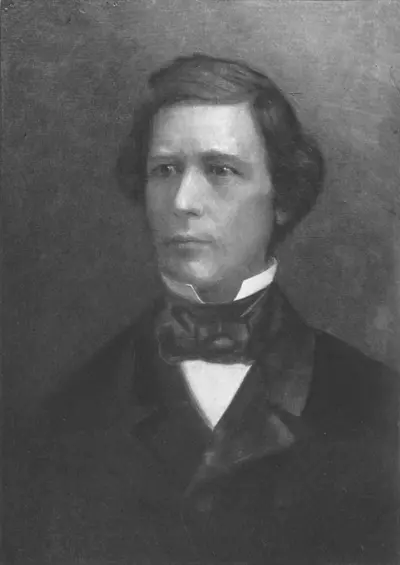
David Wilmot was an American politician and judge. He served as Representative and a Senator for Pennsylvania and as a Judge of the Court of Claims. He is best known for being the prime sponsor and namesake of the eponymous Wilmot Proviso, a failed proposal to ban the expansion of slavery to western lands gained in the Mexican Cession. A notable member of the anti-slavery Free Soil Party, Wilmot later was instrumental in establishing the Republican Party in Pennsylvania.
