Harrison G. Otis Quotes
Another clause in the Constitution is a contract on the part of the non-slaveholding States to seize and restore runaway slaves--but why restore when you have taught the slave that he has a right to freedom?
Harrison G. Otis, 1765-1848, Speaker of the Massachusetts House of Representatives, Debate, Fanueil Hall, Boston August 22, 1835
Sourced by: Eigen's Political and Historical Quotations

Lincoln had promised amnesty to Southerners who would pledge loyalty to the Union. What many feared was that this would include slave owners re-enslaving their former "property," or that the government would allow them to do so in order to stop the rebellion.

In the early days of the Civil War slaves who escaped and reached the Northern lines were routinely returned to their Southern owners as the Fugitive Slave Act required. The first actual emancipation of the Civil war was not the President’s proclamation but was Butler who as a Union General ordered that the slaves escaping from Virginia no longer be returned. He was accused of violating the then existing law, however he had a legal rationale which hoisted Virginia on its own petard.

He lost the case. When a young lawyer, Chase represented many fugitive slaves, often without compensation.


The issue of slavery was coming to a head. Northern states began passing laws like this making it a criminal offence for a government official to aid in the recovery of future slaves. Pennsylvania, Connecticut, New York and Rhode Island all passed similar statutes. The Rhode Island law is still in existence.


This was Lincoln’s first anti—slavery speech and it was memorable

The Federal Fugitive Slave Act required all in free states to assist owners of escaped slaves to return them to their owners. In 1854 a Missouri slave owner tracked his escaped slave to Wisconsin and the Federal officials incarcerated the slave pending his return. A Wisconsin mob broke the slave out of jail and helped him escape to Canada. Sherman M. Booth, Publisher & Editor of the Wisconsin Free Soil Democrat was convicted under the Fugitive Slave Act for aiding the escape. Smith’s opinion overturned the Fugitive Slave Act on the grounds that it had usurped state’s rights. The Supreme Court overturned Smith’s ruling, but Booth was pardoned. See {587926} & {587928}. The more “dread calamity” was civil war which of course came a few years later.


While Lincoln was morally opposed to slavery, at the time the Civil War was not going well for the Union. The Emancipation Proclamation caused the South great distress in terms of practicality and their morale. The slaves if they escaped could come to a Union State and would be forever free. The South would lose labor that they could ill afford to lose as well as they were forced to devote more white manpower to keeping the slaves in bondage. While most people think the Proclamation freed all the slaves, it did not; it only freed slaves in the rebellious Southern states. Border states such as Maryland, not in rebellion, could keep their slaves legally and did until they were freed later.


Lincoln was then a Whig campaigning for his party.

Although some Arab nations such as Saudi Arabia maintained legal slavery into the 1960s, Tunisia’s Emancipation pre-dated that of the United States.

This may be the first formal resolution against slavery in the Americas. This quotation shows the fact that not only did these Mennonites oppose slavery, and chastise those who bought slaves as much as the slave capturers, but they argued that the slaves had a perfect right to armed struggle to free themselves—the greatest fear of slaveholders in America. The term “negers” was not a word of disrespect but was derived from the low German spoken by the Mennonites.

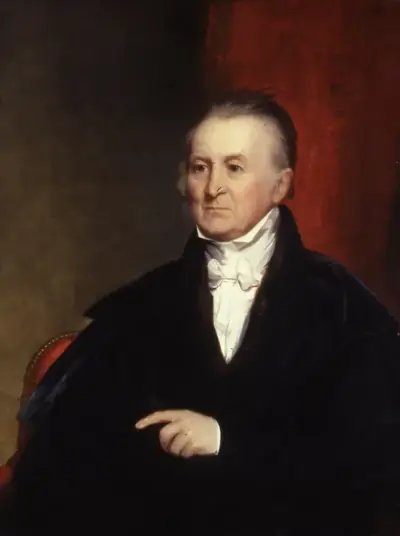
Harrison Gray Otis, was a businessman, lawyer, and politician, becoming one of the most important leaders of the United States' first political party, the Federalists. He was a member of the Otis family.
