Fidel Castro Quotes
Even in the United States, the enslavement of African descendants continued until the presidency of Abraham Lincoln. That brutal form of slavery was abolished there hardly thirty years before it was abolished in Cuba.
Castro, Fidel. "Reflections of Fidel." Granma, 2010.


This Civil War recruiting poster was described by the Free Library of Philadelphia as “Civil War recruitment print targeting African Americans by evoking the freedoms granted by the Emancipation Proclamation. Depicts a montage of symbolic scenes centered around an African American Union soldier triumphantly holding up a sword and an American flag with the banner "Freedom to the Slave." He stands near broken shackles upon a tri-color flag adorned with a coiled snake. The flag is tugged upon by one of three joyous slaves freed by an African American soldier. Other scenes depict an African American man reading a newspaper on a rocking chair near a plow and child, African American children entering a "Public School" near a church, and a regiment of "U.S. Colored Troops" marching across a battlefield strewn with dead bodies.”

Lincoln had promised amnesty to Southerners who would pledge loyalty to the Union. What many feared was that this would include slave owners re-enslaving their former "property," or that the government would allow them to do so in order to stop the rebellion.


The problem was that Congress was gridlocked on the slavery issue. The Southern states had more than their proportional share of Congressional power with slave populations being counted as 3/5 of a person for seats in the House of Representatives and parity with the other states in the Senate. The South could not stop all the attempts to debate slavery and the abolitionists attempts to end it, but they could block all legislation that might curtain slavery. As the United States was getting more sophisticated and educated hostility toward slavery was steadily increasing. The economies of the non Southern states was growing faster and more assuredly than the slave economies of the South. Abolition was all but inevitable but it would still take more time. Note that the President totally deferred to Congress on the leadership of what the policy should be. Presidents at that time were far less influential in making national policy and national legislating than they have become. Many think that the balance has shifted too far towards the Executive Branch.


Marx followed the American Civil War very closely. The freeing of the slaves caused an immediate social, moral and economic revolution, the results of which we live with today.


At the time, the prevailing federal policy was to return fugitive slaves to their owners. Lincoln was intent on keeping Kentucky and Maryland, both slave states, in the union, even at the cost of returning fugitive slaves. Shortly after, he came up with the policy of always returning fugitive slaves except in the rebellious states of the confederacy where the slaves were legally defined as ‘contraband’—war material, and thus could be seized by Union forces. Many fugitive slaves were thus employed by the Union for construction projects. Later, the Emancipation Proclamation set the slaves of the Confederacy free.
Essentially, the case of moral hazard was made against paying the slave owners. Lincoln took a pragmatic approach. However, not only was Northern opposition too strong for this proposal, but the Southern slave holders would never agree to selling their slaves. What Lincoln and most “pragmatic” Northerners did not realize is that even if the slave owners would get a fair market price for the slaves, they would be left with land and no way to work it. Their families would have no servants. They might have to work themselves like Northern farmers did, and their entire standard and style of living would be destroyed. Their sons were not well educated as many Northern young men were and were brought up to be gentlemen, politicians, and occasional soldiers—not work with their hands. They could not compete. And the slaveholders were right as the whole history of Reconstruction and backwardness demonstrated for more than 100 years.
Note that Lincoln did not justify the emancipation proclamation on moral or humanitarian grounds, but on the grounds of military necessity.

The “rupture and revolution” was Southern secession and the Civil War. This quotation is very important because it so clearly states the cause of the Civil War—the threat of the abolition or change of the institution of slavery. During the late 19th century and the first half of the 20th, many historical revisionists—in an effort to promote national unity—began stating and teaching that the cause of the rebellion was a philosophical difference over State’s rights and not something so banal as the greed for and immorality of the benefits of slavery. See {621370} for another Southern quotation illustrating this point.

While Lincoln was morally opposed to slavery, at the time the Civil War was not going well for the Union. The Emancipation Proclamation caused the South great distress in terms of practicality and their morale. The slaves if they escaped could come to a Union State and would be forever free. The South would lose labor that they could ill afford to lose as well as they were forced to devote more white manpower to keeping the slaves in bondage. While most people think the Proclamation freed all the slaves, it did not; it only freed slaves in the rebellious Southern states. Border states such as Maryland, not in rebellion, could keep their slaves legally and did until they were freed later.


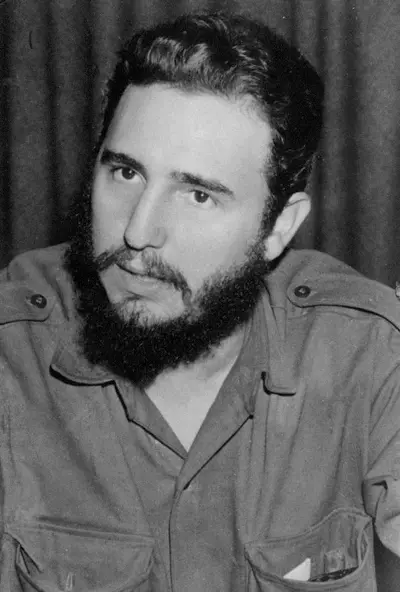
Fidel Alejandro Castro Ruz better known internationally as Fidel Castro, was a Cuban revolutionary and politician who served as Prime Minister of Cuba from 1959 to 1976 and President from 1976 to 2008. Ideologically a Marxist–Leninist and Cuban nationalist, he also served as the First Secretary of the Communist Party of Cuba from 1961 until 2011. Under his administration, Cuba became a one-party communist state; industry and business were nationalized, and state socialist reforms were implemented throughout society.
