Kenneth Frazier Quotes
My grandfather on my paternal side, Richard Frazier, was born in the late 1850s and, therefore, was born into slavery but was a sharecropper in South Carolina for his entire life.
Ignatius, Adi. "A Conversation with Merck CEO Ken Frazier on Race and Capitalism." Harvard Business Review, 15 July 2020.


He had been a politician and was serving in the Union Army. At the time he was an Army officer just returned from the front and was not yet president.

The problem was that Congress was gridlocked on the slavery issue. The Southern states had more than their proportional share of Congressional power with slave populations being counted as 3/5 of a person for seats in the House of Representatives and parity with the other states in the Senate. The South could not stop all the attempts to debate slavery and the abolitionists attempts to end it, but they could block all legislation that might curtain slavery. As the United States was getting more sophisticated and educated hostility toward slavery was steadily increasing. The economies of the non Southern states was growing faster and more assuredly than the slave economies of the South. Abolition was all but inevitable but it would still take more time. Note that the President totally deferred to Congress on the leadership of what the policy should be. Presidents at that time were far less influential in making national policy and national legislating than they have become. Many think that the balance has shifted too far towards the Executive Branch.


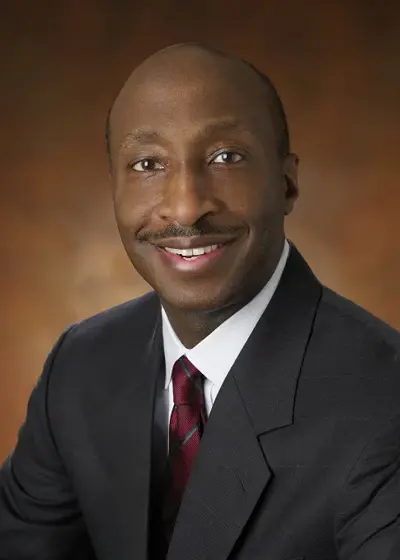
Kenneth Carleton Frazier is an American business executive. He is the chairman and CEO of the pharmaceutical company Merck & Co. (known as MSD outside of North America). After joining Merck & Co. as general counsel, he directed the company's defense against litigation over the anti-inflammatory drug Vioxx. Frazier is the first African American man to lead a major pharmaceutical company (part of the Fortune 500 companies). He was elected to the American Philosophical Society in 2018.
