George Carlin Quotes
So about 80 years after the Constitution is ratified, the slaves are freed. Not so you'd really notice it of course; just kinda on paper. And that of course was at the end of the Civil War. Now there is another phrase I dearly love. That is a true oxymoron if I've ever heard one: "Civil War." Do you think anybody in this country could ever really have a civil war? "Say, pardon me?" (shoots gun) "I'm awfully sorry. Awfully sorry."
Carlin, George. Brain Droppings. Hyperion, 1997.


While Lincoln was morally opposed to slavery, at the time the Civil War was not going well for the Union. The Emancipation Proclamation caused the South great distress in terms of practicality and their morale. The slaves if they escaped could come to a Union State and would be forever free. The South would lose labor that they could ill afford to lose as well as they were forced to devote more white manpower to keeping the slaves in bondage. While most people think the Proclamation freed all the slaves, it did not; it only freed slaves in the rebellious Southern states. Border states such as Maryland, not in rebellion, could keep their slaves legally and did until they were freed later.


Marx followed the American Civil War very closely. The freeing of the slaves caused an immediate social, moral and economic revolution, the results of which we live with today.
Professor Egerton documents how successful Reconstruction was in radically changing the positions of Blacks in the South. He points out that it was so effective that a hate-filled, racist group of Southern White terrorists, with murder, arson, torture and intimidation took over many of the governments of the South while President Andrew Johnson, who although he believed in the Union, was himself an inveterate racist and opponent of emancipation, would not use the force of the Federal Government to bring the terrorists to justice. (The KKK leaders were known in every state and county). They successfully overthrew Reconstruction and set the process back by 100 years.


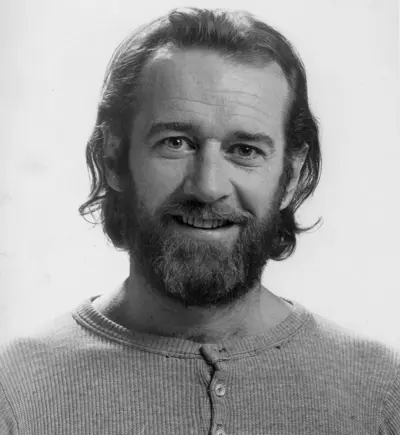
George Denis Patrick Carlin was an American stand-up comedian, actor, social critic, and author. Regarded as one of the most important and influential stand-up comics of all time, he was dubbed "the dean of counterculture comedians". He was known for his dark comedy and reflections on politics, the English language, psychology, religion, and taboo subjects. His "seven dirty words" routine was central to the 1978 United States Supreme Court case F.C.C. v. Pacifica Foundation, in which a 5–4 decision affirmed the government's power to censor indecent material on the public airwaves.
