William James Quotes
The war for our Union, with all the constitutional issues which it settled, and all the military lessons which it gathered in, has throughout its dilatory length but one meaning in the eyes of history. It freed the country from the social plague which until then had made political development impossible in the United States. More and more, as the years pass, does the meaning stand forth as the sole meaning.
James, William. Memories and Studies. Longmans, Green, and Co., 1911, p. 42.


Lincoln had promised amnesty to Southerners who would pledge loyalty to the Union. What many feared was that this would include slave owners re-enslaving their former "property," or that the government would allow them to do so in order to stop the rebellion.


This Civil War recruiting poster was described by the Free Library of Philadelphia as “Civil War recruitment print targeting African Americans by evoking the freedoms granted by the Emancipation Proclamation. Depicts a montage of symbolic scenes centered around an African American Union soldier triumphantly holding up a sword and an American flag with the banner "Freedom to the Slave." He stands near broken shackles upon a tri-color flag adorned with a coiled snake. The flag is tugged upon by one of three joyous slaves freed by an African American soldier. Other scenes depict an African American man reading a newspaper on a rocking chair near a plow and child, African American children entering a "Public School" near a church, and a regiment of "U.S. Colored Troops" marching across a battlefield strewn with dead bodies.”


While Lincoln was morally opposed to slavery, at the time the Civil War was not going well for the Union. The Emancipation Proclamation caused the South great distress in terms of practicality and their morale. The slaves if they escaped could come to a Union State and would be forever free. The South would lose labor that they could ill afford to lose as well as they were forced to devote more white manpower to keeping the slaves in bondage. While most people think the Proclamation freed all the slaves, it did not; it only freed slaves in the rebellious Southern states. Border states such as Maryland, not in rebellion, could keep their slaves legally and did until they were freed later.
Lincoln was then a Whig campaigning for his party.


The problem was that Congress was gridlocked on the slavery issue. The Southern states had more than their proportional share of Congressional power with slave populations being counted as 3/5 of a person for seats in the House of Representatives and parity with the other states in the Senate. The South could not stop all the attempts to debate slavery and the abolitionists attempts to end it, but they could block all legislation that might curtain slavery. As the United States was getting more sophisticated and educated hostility toward slavery was steadily increasing. The economies of the non Southern states was growing faster and more assuredly than the slave economies of the South. Abolition was all but inevitable but it would still take more time. Note that the President totally deferred to Congress on the leadership of what the policy should be. Presidents at that time were far less influential in making national policy and national legislating than they have become. Many think that the balance has shifted too far towards the Executive Branch.

Marx followed the American Civil War very closely. The freeing of the slaves caused an immediate social, moral and economic revolution, the results of which we live with today.


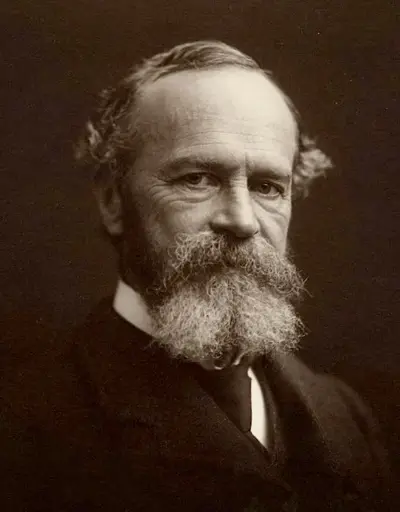
William James was an American philosopher, historian, and psychologist, and the first educator to offer a psychology course in the United States. James is considered to be a leading thinker of the late nineteenth century, one of the most influential philosophers of the United States, and the "Father of American psychology".
