Buffalo Bill Quotes
The Free State men, myself among them, took it for granted that Missouri was a slave state.
Cody, William F. An Autobiography of Buffalo Bill (Colonel W. F. Cody). Cosmopolitan Book Corporation, 1920, p. 14.


The nation in 1848 was very polarized over the issue of slavery. Taylor, never even mentioned the subject in his speeches and writings. He reused to answer any questions about the subject or indicate his own views. His strategy worked as the other politicians who took a stand—either way—alienated a large number of voters.

While Douglas and Lincoln were political opponents with little love lost between them, both were patriots. Douglas’s position were much more popular in the South, and the moment he realized that Lincoln would win the Presidency, he headed South where he was very persuasive in trying to hold the Union together, but he could not see all the potential rebels and was only effective with some. South Carolina not only seceded, but in order to prevent any changing of minds, some the worst of the South Carolinians, attacked Fort Sumter firing on the American Flag and attacking and capturing the Union troops who were totally outnumbered. The Civil War was then inevitable.


Ingersoll was considered to be the greatest orator and political thinker of his day, but his overt atheistic views curtailed his elected political career.

It is not only in modern times that there were “litmus tests” for appointees. Franklin Pierce had been elected as a Democrat with a coalition that included Southerners who were able to dominate the weak Pierce precluding abolitionists from any appointments.
This quotation is often given by those who argue that Lincoln really did not care about the slavery issue. It is a terrific example of the limitations of quotations where there is artful rhetoric. Douglas, had in the 1st debate posed 7 “interrogatories” to Lincoln asking if he were pledged to certain positions regarding slavery. Douglas was trying to associate Lincoln with the most radical abolitionists in the land. By asking if Lincoln were pledged to the positions, Douglas thought that he had cornered Lincoln. For if Lincoln denied the pledges, he would appear to be backing off his anti slavery positions, and if Lincoln would not, then he would appear to support the most radical elements. Lincoln turned the rhetorical tables on his opponent. He first answered the question literally, emphasizing “pledged”. Just as Douglas thought he had forced Lincoln off his anti-slavery views, Lincoln stated what he would “like to see” as opposed to what he was pledged for. See {615826}.


In modern times, many have complained at the disrespectful way critics refer to the president of the United States. The long for the civility of the past. As this editorial shows, uncivil criticism of the president is nothing new.


At the time, the prevailing federal policy was to return fugitive slaves to their owners. Lincoln was intent on keeping Kentucky and Maryland, both slave states, in the union, even at the cost of returning fugitive slaves. Shortly after, he came up with the policy of always returning fugitive slaves except in the rebellious states of the confederacy where the slaves were legally defined as ‘contraband’—war material, and thus could be seized by Union forces. Many fugitive slaves were thus employed by the Union for construction projects. Later, the Emancipation Proclamation set the slaves of the Confederacy free.

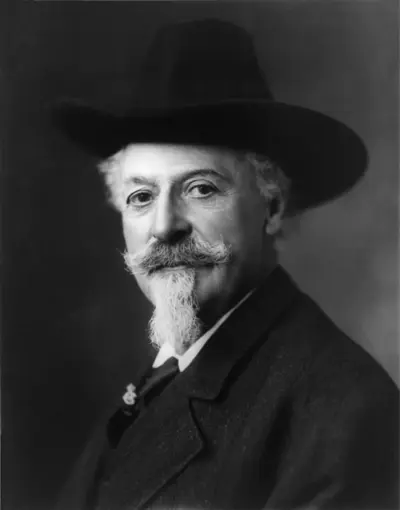
William Frederick "Buffalo Bill" Cody was an American soldier, bison hunter, and showman. He was born in Le Claire, Iowa Territory (now the U.S. state of Iowa), but he lived for several years in his father's hometown in modern-day Mississauga, Ontario, Canada, before the family returned to the Midwest and settled in the Kansas Territory.
