Susan B. Anthony Quotes
The men and women of the North are slaveholders, those of the South slaveowners. The guilt rests on the North equally with the South.
Harper, Ida Husted. The Life and Work of Susan B. Anthony, Vol. I. The Bowen-Merrill Company, 1898.


This quotation is often given by those who argue that Lincoln really did not care about the slavery issue. It is a terrific example of the limitations of quotations where there is artful rhetoric. Douglas, had in the 1st debate posed 7 “interrogatories” to Lincoln asking if he were pledged to certain positions regarding slavery. Douglas was trying to associate Lincoln with the most radical abolitionists in the land. By asking if Lincoln were pledged to the positions, Douglas thought that he had cornered Lincoln. For if Lincoln denied the pledges, he would appear to be backing off his anti slavery positions, and if Lincoln would not, then he would appear to support the most radical elements. Lincoln turned the rhetorical tables on his opponent. He first answered the question literally, emphasizing “pledged”. Just as Douglas thought he had forced Lincoln off his anti-slavery views, Lincoln stated what he would “like to see” as opposed to what he was pledged for. See {615826}.


The nation in 1848 was very polarized over the issue of slavery. Taylor, never even mentioned the subject in his speeches and writings. He reused to answer any questions about the subject or indicate his own views. His strategy worked as the other politicians who took a stand—either way—alienated a large number of voters.


In modern times, many have complained at the disrespectful way critics refer to the president of the United States. The long for the civility of the past. As this editorial shows, uncivil criticism of the president is nothing new.
It is not only in modern times that there were “litmus tests” for appointees. Franklin Pierce had been elected as a Democrat with a coalition that included Southerners who were able to dominate the weak Pierce precluding abolitionists from any appointments.


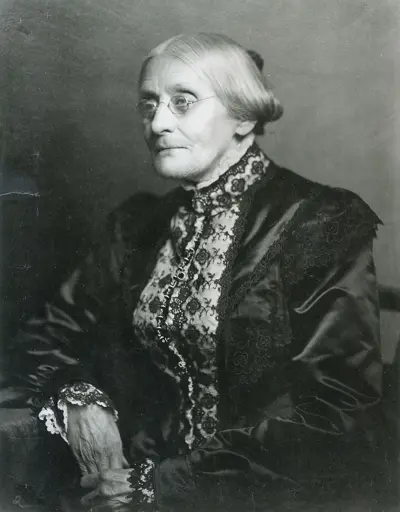
Susan B. Anthony was an American social reformer and women's rights activist who played a pivotal role in the women's suffrage movement. Born into a Quaker family committed to social equality, she collected anti-slavery petitions at the age of 17. In 1856, she became the New York state agent for the American Anti-Slavery Society.
