Michel Aflaq Quotes
Communism is Western, and alien to everything Arab, having absolutely no connection to Arab history, intellectual traditions, and way of life in either the past or the present
Michel Aflaq, 1910-1989, Syrian Education Minister, Syrian Founder of the Baath Party & Intellectual Leader of the Arab Nationalist Movement, Leader of the Baathist Party of Iraq, Quoted in Makiya. Republic of Fear
Sourced by: Eigen's Political and Historical Quotations

This Arab nationalist leader was actually a Christian Orthodox by religion. He also tried to make the Baath party a secular state and he was a strong advocate of free speech and democracy. When the Islamic fundamentalists became important in Mid East Politics, the Baath Iraq Government under Saddam Hussein claimed, with no evidence, that Aflaq converted to Islam on his deathbed, thus making his philosophy more acceptable to the vast majority of Arabs.

Dayan was a strong advocate for co-existence with the Arabs and an understanding of their frustrations and disappointments without bowing to the extremists who wanted to destroy Israel.

Few non-Arab Muslims would publicly admit this historical truth, and at the time this view was shocking to the most religious men in Turkey. However it resonated with many of the average citizens. The entire Arab world had been subject to and controlled by Turkey, and amongst the Turks, the backward Arabs, were not very popular and were historically seen as underdeveloped colonial subjects.


Ataturk wrote this manual personally. Religious Turks took violent offense to Ataturk’s proclamation that Turks were great without Islam.


The Germans allied themselves with the Islamic insurgency of the day as a strategic maneuver. The Grand Mufti of Jerusalem broadcast propaganda from Nazi radio in Berlin and was dispatched to organize Muslim fighters in Iraq. Fascism was introduced into the Middle East and the Arabs and Persians saw it as a natural extension of their authoritarian and highly prescriptive forms of religious and civil government. 60 years later, there would be Islamic Fascists throughout the Middle East in control or vying for control of many of the countries.

At the Seventh World Congress of the Comintern in 1935 the new Popular Front policy was announced. To communist hard-liners and to the far left, the policy was an abandonment of the Marxist revolutionary line.

The reason this is an important quotation is that since the end of WWII, most Americans have used the term “socialism” rather loosely. President Obama for example is often referred to as a socialist by his political enemies. Conservatives refer to Norway, Sweden and Denmark and other European nations as socialist states. But none of them would ever meet the definition of a socialist state of the major socialist state in history. After WWII, the Russians intimidated many of the Eastern European with force of arms and there were some other socialist states for a while but the all abandoned Soviet style Russian socialism, Ironically, the only state that the old Russian Communists would recognize in 2011 was Cuba. However, there are many who call themselves socialists who would never agree that the Soviet Union was remotely a socialist state—they see it as a Fascist dictatorship.


For most Muslims, their religious identity supersedes their nationalistic identity. Sukarno’s quotation is famous because many ultraorthodox Muslims castigated him for putting nationalism before Islam. There is an orthodox Islamic concept of the Ulma—the community of all Muslims in the world, and this takes precedence over any nation or set of nations. In that sense, extreme Islamic fundamentalists have always opposed Sukarno claiming he was an enemy of Islam.


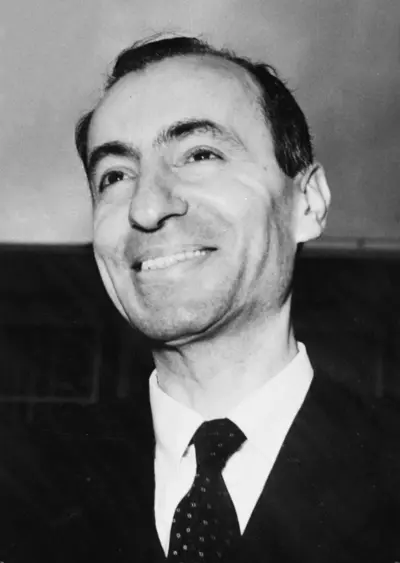
Michel Aflaq was a Syrian philosopher, sociologist and Arab nationalist. His ideas played a significant role in the development of Ba'athism and its political movement; he is considered by several Ba'athists to be the principal founder of Ba'athist thought. He published various books during his lifetime, the most notable being The Battle for One Destiny (1958) and The Struggle Against Distorting the Movement of Arab Revolution (1975).
