Michel Aflaq Quotes
Arab nationalism is not a theory but the source of all theories
Michel Aflaq, 1910-1989, Syrian Education Minister, Syrian Founder of the Baath Party & Intellectual Leader of the Arab Nationalist Movement, Leader of the Baathist Party of Iraq, Quoted in Choueiri, Arab Nationalism
Sourced by: Eigen's Political and Historical Quotations

This Arab nationalist leader was actually a Christian Orthodox by religion. He also tried to make the Baath party a secular state and he was a strong advocate of free speech and democracy. When the Islamic fundamentalists became important in Mid East Politics, the Baath Iraq Government under Saddam Hussein claimed, with no evidence, that Aflaq converted to Islam on his deathbed, thus making his philosophy more acceptable to the vast majority of Arabs.

The Germans allied themselves with the Islamic insurgency of the day as a strategic maneuver. The Grand Mufti of Jerusalem broadcast propaganda from Nazi radio in Berlin and was dispatched to organize Muslim fighters in Iraq. Fascism was introduced into the Middle East and the Arabs and Persians saw it as a natural extension of their authoritarian and highly prescriptive forms of religious and civil government. 60 years later, there would be Islamic Fascists throughout the Middle East in control or vying for control of many of the countries.

Bath parties developed in several Arab countries: In Iraq and Syria they actually came to power. However, they were soon at each other’s throats and never became the unifying force in the Arab world that they had hoped to become at their founding. The quotation turned out to be a hope and a dream but not a realistic assessment of reality.

The Arab League Members have historically been at each others throats with little concordance except hatred of Israel and Jews


See Huey Long for a similar point of view.


She is a leading American Arab who is a Syrian expatriate. The examples she gives in the beginning of the quotations are relatively recent atrocities where Muslims have attacked and brutally murdered other Muslims. She articulates one of the theories to explain the Islamic propensity to brutality and violence that the religion itself, when taught literally which it so often is, actually produces an inclination and glorification of brutal violence and develops a tolerance and acceptance of Islamic violence.

This Proclamation was issued upon arrival of the British occupying imperial army in present day Iraq. The English policy makers like the Bush administration almost a century later were expecting a more welcoming reaction. See {585250}.

Ataturk wrote this manual personally. Religious Turks took violent offense to Ataturk’s proclamation that Turks were great without Islam.

Western Saudi Arabia. Although his claim to rule all Arabs was never recognized by other nations and he was deposed by other Arabs in 1924, his sons Feysal I and Abdullah ended up ruling Iraq and Transjordan.

American Presidents after Wilson have not, in general, shared this view. By the latter part of the 20th century judgmentalism was a major component of American foreign policy and reached its zenith with the administration of George W. Bush.


What is particularly interesting about this quotation is that at the time, this was a common concern by political and social thinkers of the West. Here however, we learn that there was apparently the same concern and problem ongoing in the Muslim Middle East.


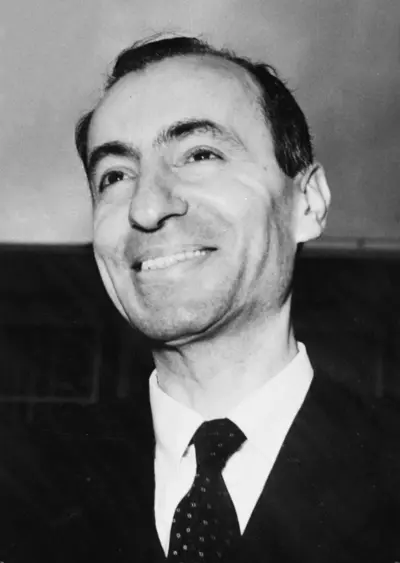
Michel Aflaq was a Syrian philosopher, sociologist and Arab nationalist. His ideas played a significant role in the development of Ba'athism and its political movement; he is considered by several Ba'athists to be the principal founder of Ba'athist thought. He published various books during his lifetime, the most notable being The Battle for One Destiny (1958) and The Struggle Against Distorting the Movement of Arab Revolution (1975).
