Irving Kristol Quotes
The major political event of the twentieth century is the death of socialism.
Irving Kristol, 1920-2009, Political columnist, journalist, and writer, Founder of the Neoconservatism Movement, Neo-Conservatism: The Autobiography of an Idea, 1995, [The right wing in America went through a very interesting split. On one side was Kristol and most highly educated conservatives who saw the fall of the Soviet Union and the Conversion of China to a capitalistic, albeit controlled economy, as the practical end of socialism. Ib the other side were many who believed that all the European nations were socialist, and America is rapidly becoming a socialist state, with a President—Barack Obama—who was an affirmed socialist. However, to the latter group, everything they did not like, they called socialists.
Sourced by: Eigen's Political and Historical Quotations


The Red Scare had already reached most conservatives and Truman and most others had not yet been affected by the fear of Communism that so many people had through the 1970s.


At the Seventh World Congress of the Comintern in 1935 the new Popular Front policy was announced. To communist hard-liners and to the far left, the policy was an abandonment of the Marxist revolutionary line.

The one area where communists were successful was in fighting for the Russian Homeland in WWII and the subsequent assault on Germany from the East. Most American military experts did not believe that the Russians could hold out. However with American weapons and supplies they proved most effective in causing German casualties. The Russians, however, had lost 22 million soldiers and civilians—a fearful cost. But the Communists proved they could lead a nation at war, and this success bought them 50 years of acceptance from the Russian people before their inability to manage a civilian society finally became clear and the Soviet Union collapsed.

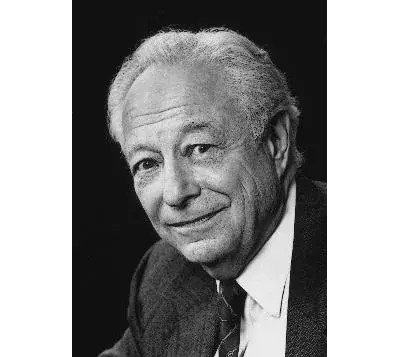
Irving Kristol was an American journalist who was dubbed the "godfather of neoconservatism". As a founder, editor, and contributor to various magazines, he played an influential role in the intellectual and political culture of the last half of the twentieth century. After his death, he was described by The Daily Telegraph as being "perhaps the most consequential public intellectual of the latter half of the [twentieth] century".
