Mwai Kibaki Quotes
There is no room for communists in Kenya.
Mwai Kibaki, President of the Republic of Kenya, Statement as Vice-President of Kenya in 1978
Sourced by: Eigen's Political and Historical Quotations


who worked with the Communists. The Communists were to Flip-flop again when Russia needed arms and assistance to fight Hitler when the pact broke down. See {595773}


Seeger’s admission was typical of tens of thousands of Americans who had become disillusioned with the fairness, equity, and effectiveness of capitalism during the depression. They were easy prey for Communist propaganda which pointed out all the problems in American society from legal racial discrimination to lack of a social safety net while at the same time lying about the Russian achievements and hiding the horrible abuses of human rights—especially the political murders of millions of people. Then the truth about Russia emerged, Seeger and so many others abandoned the Communist Party as at the same time America was improving its society and beginning to try and deal with the great problem that had plagued America from its inception—racism and slavery.


Although the Nazis railed against the Communists & Socialists, the potential opposition they feared the most was the middle class. See also {582967}.


Despite the fact that many Americans saw communists and socialists as of the same ilk, socialists were very suspicious of communists—especially the “party discipline” and the lack of individual freedom, while the communists saw the socialists as just another form of fascism and attacked it violently. Later, the party line against socialists softened as Cold War communist strategy solicited assistance from the socialist, unaligned nations.


So often in America, citizens and government officials have made alliances or joined organizations under the theory that “the enemy of my enemy must be my friend.” It has almost always been a mistake ranging from joining the Communist Party in the 1930s to supporting the dictators or the Middle East, Asia, and South America. In the 1930s Fascism was growing and already on the march and neither America nor England—the leading democracies were not doing anything to combat the threat. America was emerging from the Great Depression, had a string Isolationist movement, and a small but influential group of Fascists and Hitler enthusiasts. Also, no one outside of Russia knew about the Stalin atrocities.

The Red Scare had already reached most conservatives and Truman and most others had not yet been affected by the fear of Communism that so many people had through the 1970s.

For years the Nationalist Military under Chiang Kai-shek and other Generals like Ma Hongkui had murdered suspected communist politicians, and in the Civil War with the communists rarely took any prisoners. The Communists in turn, “tried” and executed landlords and other major capitalists who had previously in their view treated the peasants badly and were responsible for much starvation. Neither side had any scruples about ignoring human rights and committing war crimes.


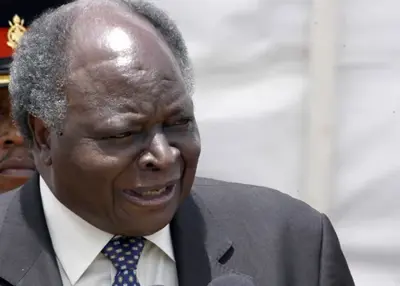
Emilio Stanley Mwai Kibaki, C.G.H. is a Kenyan politician who was the third President of Kenya, serving from December 2002 until April 2013.
