Vladimir Lenin Quotes
The existence of the: Soviet Republic, side by side with the imperialist states for a long time is unthinkable. One or the other must triumph in the end.
Vladimir Lenin
Nikolai Lenin, 1870-1924, Russian Communist Premier, Quoted in Political Science Quarterly, March / April 2005
Sourced by: Eigen's Political and Historical Quotations

Vladimir Lenin. While Lenin was of this view, Stalin and other hard liners disagreed. They not only imposed their brand of communism on their own people via force with terrible consequences for any dissidents, but the Soviet Army imposed Communism on most of the states of Eastern Europe, and those states in turn used their Armies and secret police to impose it on their own citizens.

The British suspected that the Turks of Anatolia were complicit with Bolshevism


This became known as the Brezhnev Doctrine.


This is an example of what made the Cold War so difficult. The Italian Communists had great misgivings about the Russian version of Communism that tended to abuse human rights and try and control other countries. However, when the Russian Communists were under world attacks by the West, as with their incursion into Hungary, he urged that all the Communists stick together and defend the Russians even for policies that they thought wrong. On the West side, the same thing occurred. The United States tolerated and supported a number of terribly oppressive dictatorships that were virulently anti-Communist. Polarization was the international norm.


Vladimir Lenin


He moved to the U. S. after these events.


So many Afghans thought very differently and resisted Amin’s Government and the Russians, that the Russians pulled out of Afghanistan.

The “October Revolution” was the Russian Revolution of 1917.
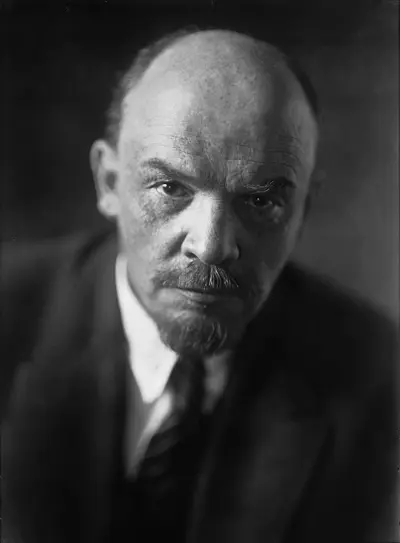
Vladimir Ilyich Ulyanov, better known by his alias Lenin, was a Russian revolutionary, politician, and political theorist. He served as the first and founding head of government of Soviet Russia from 1917 to 1924 and of the Soviet Union from 1922 to 1924. Under his administration, Russia, and later the Soviet Union, became a one-party socialist state governed by the Soviet Communist Party. A Marxist, he developed a variant of this communist ideology known as Leninism.
