Richard Baxter Quotes
But one great Benefit the Plague brought to the City, that is, it occasioned the Silenc'd Ministers more openly and laboriously to Preach the Gospel, to the exceeding comfort and profit of the People….when the Plague grew hot, most of the Conformable Ministers fled, and left their Flocks, in the time of their Extremity: whereupon divers Non-conformists pitying the dying and distressed People, that had none to call the impenitent to Repentance, nor to help Men to prepare for another World; nor to comfort them in their Terrors, when about Ten Thousand dyed in a Week, resolved that no obedience to the Laws of any mortal Men whosoever, could justifie them for neglecting of Men's Souls and Bodies in such extremities; no more than they can justifie Parents for famishing their Children to death:
Richard Baxter, 1615-1691, Puritan Devine, Plague, Fire and Confusion
Sourced by: Eigen's Political and Historical Quotations


Constantine the Great. This is one of Constantine’s major defenses of his decision to adopt Christianity. Scholars today still argue as to what part practical politics played in Constantine’s conversion and what part was his personal religious conversion.

This passage was one of those used by Christian apologists for slavery. Critics of some Christian churches point to this passage as illustrating the lack of morality in traditional Christianity when it same to fundamentals such as human slavery. In this particular quotation, the slave master is likened to Christ. Ironically, it was Christian abolitionists in England and the United States who saw other passages of the New Testament and the Gospel of Christ as disapproving of slavery and those Christians where among the most effective of the abolitionists.


Those who argue that the United States is a Christian country often point to this quotation to illustrate the fundamental religious purpose to the Massachusetts Colonies

Philip II, by this statement, and his subsequent behavior, made a major step forward in France for the separation of church and state. Previously, French kings played a major part in the selection of the bishops and other high clerics of the realm. Phillip ceased that type of interference. He did however, close down a religious commune for misbehavior, but that was at the request of both the church and civil authorities. See {617074} . The religious authorities at the time were delighted with this form of separation of church and state, but they were adamant that their church should be able to influence the monarchy and laws of the realm. In contrast today, the Chinese government does not allow any religion to interfere with the operation of the government, but insists that the Dali Lama and the Bishops of the Catholic church can only be appointed with their approval. Separation of church and state is a two way phenomenon.

Spinoza’s ideas were considered so radical and dangerous that he was the only man in history who was excommunicated by the Catholics, the Jews and the Muslims. This was his observation after his first excommunications -- by his Jewish Congregation in Amsterdam.


His most influential teacher was the English philosopher and feminist, Annie Besant, 1847-1933. See her quotations for some parallel ideas.


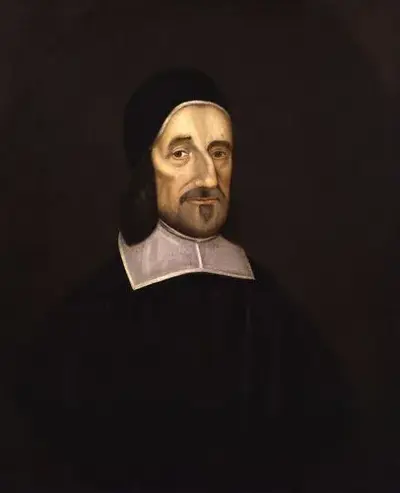
Richard Baxter was an English Puritan church leader, poet, hymnodist, theologian, and controversialist. Dean Stanley called him "the chief of English Protestant Schoolmen". After some false starts, he made his reputation by his ministry at Kidderminster, and at around the same time began a long and prolific career as theological writer. After the Restoration he refused preferment, while retaining a non-separatist Presbyterian approach, and became one of the most influential leaders of the Nonconformists, spending time in prison. His views on justification and sanctification are somewhat controversial and unconventional within the Calvinist tradition because his teachings seem, to some, to undermine salvation by faith, in that he emphasizes the necessity of repentance and faithfulness.
