Robert Baird Quotes
There being no longer a union of Church and State in any part of the country, so that religion must depend, under God, for its temporal support wholly upon the voluntary principle: it seemed of much consequence to show how vigorously, and how extensively, that principle has brought the influence of the Gospel to bear in every direction upon the objects within its legitimate sphere....
Robert Baird, 1798-1863, Presbyterian Minister, Religion In America, 1856
Sourced by: Eigen's Political and Historical Quotations

While this principle is very clear to us today, and was to the people who originally ratified The Constitution, there were many attempts by Christian groups to establish a privileged position for Christianity. For example, for years the Sunday Sabbath was legally enforced by unconstitutional Blue Laws that prohibited businesses from operating on the Christian Sabbath and prohibited activities that compete with Sunday church attendance. Supreme Court Justice Story even argued that the First Amendment allowed Christian religious supremacy and Cooley wrote this to refute Story’s now discredited doctrine.


This is one of the key documents showing the “wall of separation of church and state” was in use in early America. Almost 200 years later the Chief Justice of the Supreme Court seemed ignorant of this communications. See William Rehnquist: {373663}


Adventists, like Jews and other groups believe that Sunday was the first Biblical day, and Saturday, the 7th and the Sabbath. Senator Blair had introduced a bill to make Sunday, the National Sabbath and require that all respect it. It was fought by the Adventists and others.

This quotation is one of the first to make the critical observation that the only time that tolerance of a religion is necessary is when there is an established church and others that deviate from it. If there is no established church, as the Founding Fathers envisioned, there is no preeminent church to do the tolerating. All are equal. In practice, Protestant churches were proportionately dominant in early America and up through the 20th century. So most of the issue of tolerance problems in America were cultural. And there is still a minority of Christians who believe that America should be a Christian country and other religions should be “tolerated.” However, Clinton and most of the founders did not want to see even general Christianity established as the national religion even they it was the majority religion.


At the beginning of our nation, before there was a Constitution, the state of Virginia prohibited clergy from serving in the state legislature.


Those who claim that the founding fathers contemplated religion as a critical component of government often point to this article of the South Carolina Constitution. However, they ignore the almost simultaneous passage of the New York constitution as in {612166}. When the framers of the Constitution met in 1787 in Philadelphia the separation of church and state issue was not really resolved and awaited the Bill of Rights where the separatists won out.


The wording was rejected and the delegates insisted upon the original proposed language: “Well aware that Almighty God hath created the mind free …” This is a very important historical quotation because it shows that Henry and a few others wanted to make the society Christian centric, However, the majority insisted that it be non-sectarian. Many of the delegates rejecting the “Jesus Christ” language were themselves practicing Christians, but they were aware of the terrible religious wars and strife in Europe and between Christians and Muslims as well as the persecution of Jews, Quakers, and other sects; they did not want that in America so they rejected the idea of an established Christian Church or culture.


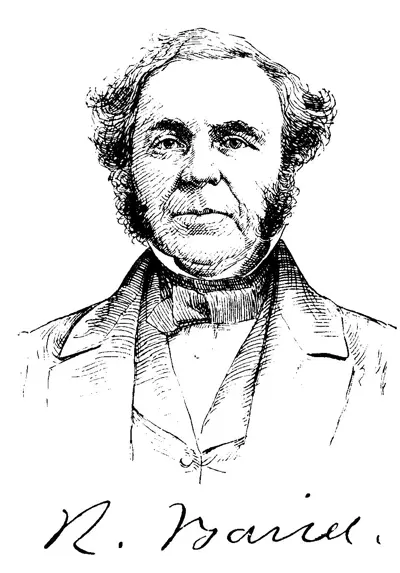
Robert Baird was an American clergyman and author. He was born in Fayette County, Pennsylvania, near Pittsburgh, and graduated at Jefferson College in 1818 and at Princeton Theological Seminary in 1822. He taught at an academy at Princeton, New Jersey for five years while tutoring at the College of New Jersey and preaching occasionally. (In 1824, he helped to create the Chi Phi Society, a semi-religious, semi-literary organization, which ceased activity the following year when it merged with the Philadelphian Society.) In 1827 Baird became a New Jersey agent for the American Bible Society, distributing Bibles among the poor and laboring among destitute Presbyterian churches. His survey of educational deficiencies eventually led to the introduction of a system of public education in New Jersey.
