Richard Mentor Johnson Quotes
[The line] cannot be too strongly drawn between church and state.
Richard M. Johnson, 1780-1841, U. S. Congressman and Senator (Democratic Republican, KY), Vice President of the United States, Report to Congress regarding a proposal for the Federal government to respect the Sabbath, close post offices on Sunday, etc., 1829
Sourced by: Eigen's Political and Historical Quotations


Carter was personally one of the most religious of our Presidents.


This quotation is one of the first to make the critical observation that the only time that tolerance of a religion is necessary is when there is an established church and others that deviate from it. If there is no established church, as the Founding Fathers envisioned, there is no preeminent church to do the tolerating. All are equal. In practice, Protestant churches were proportionately dominant in early America and up through the 20th century. So most of the issue of tolerance problems in America were cultural. And there is still a minority of Christians who believe that America should be a Christian country and other religions should be “tolerated.” However, Clinton and most of the founders did not want to see even general Christianity established as the national religion even they it was the majority religion.

At the time. Catholics in America were proportionately many fewer than today, and anti-Catholic sentiment and discrimination was very common. If the government then could become involved with religion, the protestant-dominated government would likely have restricted the Church and Catholics. So Catholics were, like Bishop England an absolutist for the separation of church and state. However towards the end of the 20th century, Roman Catholics were about 25% of the population and anti-Catholic sentiment was reduced to relatively few Protest extremists, who were rejected by the main stream even of Protestants. Then the Catholic bishops began to change their position and advocated Federal aid to parochial schools and various Catholic social services. They also began to lobby government to make laws enforcing the Catholic views of morality.


Madison, while a member of the House, had opposed the appropriation of funds for Congressional Chaplains and lost. Strict constructionists often quote his statements regarding Congressional Chaplains. Loose constructionists point to the fact that a majority of the Congress indeed appropriated the funds.

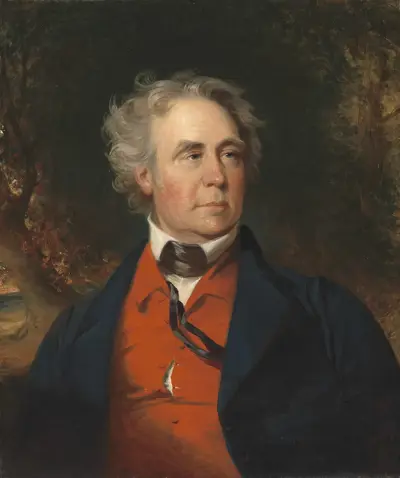
Richard Mentor Johnson was an American lawyer and politician who served as the ninth vice president of the United States, serving from 1837 to 1841 under President Martin Van Buren. He is the only vice president elected by the United States Senate under the provisions of the Twelfth Amendment. Johnson also represented Kentucky in the U.S. House of Representatives and Senate. He began and ended his political career in the Kentucky House of Representatives.
