Ambrose Bierce Quotes
Bigamy, n. A mistake in taste for which the wisdom of the future will adjudge a punishment called trigamy.
Bierce, Ambrose. The Devil's Dictionary. New York: Neale Publishing Company, 1911.


This is a classic example of taking a principle and extrapolating it to an absurd degree. The Supreme Court did rule that there was a right to privacy and did rule that the state could not interfere with most consensual sex in the home including adultery. However the court did not permit bigamy or polygamy, sex with minors, and a host of other areas where the common weal is benefitted. Santorum and others with his view believe that the state should have the right to criminalize adultery and homosexual contact in a private home. And they indeed had this prerogative at earlier times. People were jailed for adultery in Virginia, for having intercourse in different positions in Alabama, for using condoms in Connecticut and others. However, most of the support for these sexual control laws came from religious fundamentalists who wanted the state to enforce their religious beliefs on all. That together with the privacy right, no longer allowed these state abuses if individual freedom. Ironically, most of the advocates for the state’s having the right to restrict sexual freedom. Think of themselves as advocates of individuality and the government not telling folks what to do or how to behave.


This quotation illustrates the Catch 22 dilemma that faces a minority. Black slaves were not allowed to marry and have formal families. After the Civil War racists warned against Blacks who had no respect for marriage monogamy end civil family life. See {619099} But when the slaves were freed and the ex slaves attempted to formalize and solemnize their marriages, they were castigated for that – acting like white people.


The church advised this to its members

Luther’s logic was that polygamy was sanctioned in the Old Testament and never specifically forbidden in the New Testament. This fact totally puzzled the American Mormons when the Protestants railed against the immorality of their plural marriages.


Spinoza was one of the most feared intellectuals in human history—feared, that is, by the established power structures. Spinoza’s ideas were considered so radical and dangerous that he was the only man in history who was excommunicated by the Catholics, the Jews and the Muslims.

Dmitri Ivanovich Mendeleev was a great scientist who had created the famous Periodic Table of the Elements. He was also the major science advisor to the Czar and his government. He had been divorced but had not waited the required 7 years before remarrying. Therefore according to Russian religious law at the time, he was legally a bigamist, and could not hold a position in the government and should be prosecuted. A complaint was made to the Czar and this was his reply. There are a few scholars who do not feel this quotation was documented well enough to be accepted.
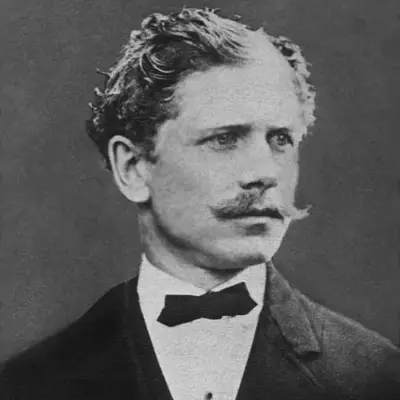
Ambrose Gwinnett Bierce was an American short story writer, journalist, poet, and Civil War veteran. His book The Devil's Dictionary was named as one of "The 100 Greatest Masterpieces of American Literature" by the American Revolution Bicentennial Administration. His story "An Occurrence at Owl Creek Bridge" has been described as "one of the most famous and frequently anthologized stories in American literature"; and his book Tales of Soldiers and Civilians (also published as In the Midst of Life) was named by the Grolier Club as one of the 100 most influential American books printed before 1900.
