Vine Deloria Jr. Quotes
Before any final solution to American history can occur, a reconciliation must be effected between the spiritual owner of the land - American Indians - and the political owner of the land - American Whites. Guilt and accusations cannot continue to revolve in a vacuum without some effort at reaching a solution.
Deloria, Vine. God Is Red: A Native View of Religion. Grosset & Dunlap, 1973.


Mohamed Anwar El-Sedat

The central Indian policy problem for Jefferson’s Administration was the fact that most Indians hunted for subsistence and the amount of land needed to support a hunting society was per capita much greater than an agricultural and especially an industrial one. Jefferson had no personal animosity against the Indians as many in his day did. But he perceived the need to obtain Indian lands for white agricultural use.


Wayne played so many parts depicting whites in the process of expanding Westward that many people saw him as an expert on the history of the Westward Expansion. He did not comment on the whites who then kept huge ranches “selfishly” for themselves or those who selfishly would not share the mineral rich land that they had taken with anyone including the original Indian owners. So in this view, the Indians should have not been capitalists but they should have been socialists and shared their resources.

This is an important quotations for two reasons. First, one of the white Europan myths in the colonial era was that the Native America had not concept of land ownership and title. This quotation clearly refutes that/ Second, this shows that some Europeans coming to the new world opposed the view that the white Christians and a moral right to the Native American “heathen” land. A few like Williams did not.

Jackson refused to obey this decision, He was the only American President who disobeyed a Supreme Court Decision. In doing this, he killed tens of thousands of Indians, allowed the Southern Whites to steal most of the Cherokee land. His Indian Removal, contrary to this Supreme Court decision, was the worst case of ethnic cleansing in the history of the United States.
The whites had constantly encroached on the Cherokee land which was too large for any reasonable patrolling by the Indians themselves. The Federal government persuaded the Cherokee to sign a treaty by which the Indians would give up their title to the larger part of their land. The most important quid pro quo was that the Federal Government would protect the remainder of the Cherokee land from incursion by whites or even other Indians. However, whites who coveted the land started to encroach and build farms and ranches. The Federal government was reluctant to use American soldiers against American citizens and was looking for a way out. However, the Cherokee chiefs were reminding them of their obligation. The state governments were less concerned about Federal treaties, and Georgia passed a law that said that all the Cherokee land must be governed by State Law contrary to the Treaty which gave the Cherokee total sovereignty. But the Feds were not anxious to have a showdown with the states on this issue. Whites, with the connivance of the state governments and the support of some Federal Officials offered to amend the treaty with the Cherokee. The whites would pay the Indians fair market value for their land in the East. The Federal Government would provide equal amount of land in the Indian Territory of Oklahoma, then a territory. The Feds would assist with the relocation and provide troops to protect the Cherokee from thieves and raiders—whites and Indians, and would guarantee that the Cherokee would be completely sovereign in the new land. The chief’s did not want to renegotiate the old treaty—they just wanted it enforced. The Supreme Court ruled in their favor, but President Jackson, ignored the ruling and forced the Cherokee onto the Trail of Tears for Oklahoma and the whites took over the valuable Cherokee land.

Wilson was a descended from a line of fundamentalist Presbyterian Ministers who believed firmly that God ordained the Holy Land for the Jewish People. Even though the WWI peace was the main topic of the Versailles Treaty negotiations, because the Turks made the poor judgment to ally themselves with the Germans and the Ottoman Empire was to be broken up. There was much lobbying by Zionists of many countries and many Arab groups even then.


The Freedmens Bureau was created after the Civil War to assist newly emancipated Black slaves. In 1866, there was a debate in Congress to allow poor whites to obtain the services of the Freedmens’ Bureau. As a practical matter most of the poor whites were just as illiterate and poor as the ex-slaves. President Andrew Johnson was particularly anxious to assist the poor whites. See Quotation 643686.

His Indian Removal Policy forced Native American to leave their lands which were theirs by treaties signed by the United States and marched to the poorest land in Oklahoma where they were "resettled". This is often referred to as the "Trail of Tears". What made his actions evern wors was the fact that The Supreme Court had already ruled that such land belinged to the Cherokee Indian Tribe and the government of the United States may not force them from it. Jackson was the only President in Amrican History to defy a Supreme Court order.


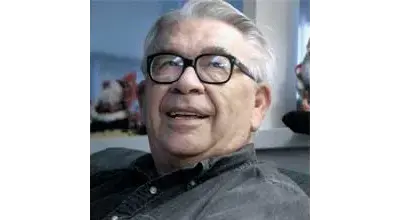
Vine Victor Deloria Jr. was an author, theologian, historian, and activist. He was widely known for his book Custer Died for Your Sins: An Indian Manifesto (1969), which helped attract national attention to Native American issues in the same year as the Alcatraz-Red Power Movement. From 1964 to 1967, he served as executive director of the National Congress of American Indians, increasing tribal membership from 19 to 156. Beginning in 1977, he was a board member of the National Museum of the American Indian, which now has buildings in both New York City and in Washington, DC, on the Mall.
