Ludwig Quidde Quotes
Armaments are necessary - or are maintained on the pretext of necessity - because of a real or an imagined danger of war.
Quidde, Ludwig. "Security and Disarmament." 12 Dec. 1927, Oslo, Norway. Nobel Lectures, Peace 1926-1950, edited by Frederick W. Haberman, Elsevier Publishing Company, 1972.


Hobson, like Mark Twain in America, was a major critic of imperialism.


America, England, Germany and France Many Japanese leaders predicted war between the Great Powers while America and its European Allies did not see the danger as clearly. Shortly after 1936, Hitler began the Second World War. Japan was indeed prepared. Hiranuma became one of the Japanese extremists and after WWII was convicted of war crimes and given a life sentence.


Clark had commanded the American and NATO forces in the Serbian War where all the military and political objectives were accomplished with heavy losses to the Serbian’s and none to the allied side—what many think was the most successful war in American History. Like Eisenhower in WWII one great challenge was the political and strategic one of keeping the coalition of all the allied governments working together. His perspective had been like Eisenhower’s which was much wider and geopolitical than most military officers.


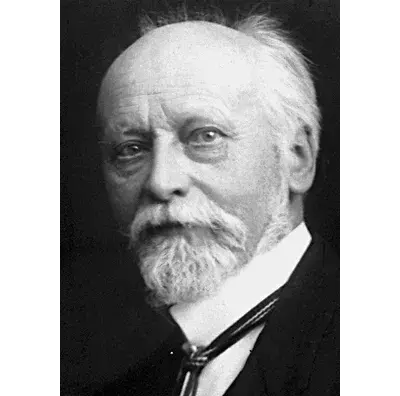
Born into a wealthy bourgeois merchant family, Quidde grew up in Bremen, read history and also got involved in the activities of the German Peace Society (Deutsche Friedensgesellschaft). In his younger years he had already opposed Bismarck's policies. In 1881 he received his PhD at the University of Göttingen. In 1894 Quidde published a 17-page pamphlet entitled Caligula. Eine Studie über römischen Caesarenwahnsinn (Caligula: A Study of Imperial Insanity). Containing 79 footnotes, the short essay is exclusively about the Roman Empire of the 1st century AD. However, Quidde drew an implicit parallel between the Roman Emperor Caligula and Wilhelm II, de facto accusing both rulers of megalomania. The author had insisted on publishing his pamphlet under his real name, which effectively ended his academic career as a historian when, in some periodical, a short review explained the parallels which otherwise might have gone unnoticed. After he made a derogatory comment on a new medal in honour of William I, German Emperor, German Emperor from 1871 to 1888, he was criminally convicted of lèse majesté, and sentenced to three months in prison, which he served in Stadelheim Prison.
