George Henry Moore Quotes
Amidst all their wrongs the Irish people have hitherto held fast to one sacred right which, though often menaced, has never been betrayed their right to that which has been their sword and shield in doubt, in trouble, and in danger ; their right to that one social blessing that has brightened their past and cheers their future history; their right to that leadership and political guidance through which they have obtained all their rights, and through which—with the blessing of God—they are resolved to maintain them, their right to the free voice and unfettered patriotism of their clergy- a right which they have bought with their blood, and which they will never permit to be sold…to place an interdict upon the clergy- in their efforts to vindicate the social and religious rights of their people- would be the most wicked because the most subtle and dangerous of all the penal laws by which it has been sought to damn and degrade us.
See {617354} for what stimulated the issue.
George Henry Moore, 1810-1870, Irish Patriot & Member of British Parliament, Speech, Demonstration, Thurles, December, 1854
Sourced by: Eigen's Political and Historical Quotations

1st Earl of Oxford

This speech to over 100,000 people galvanized the Indian nationalists They had been asking the British to change the constitution to give India more independence. Churchill was opposed to any policy that would diminish the British Empire, but needed the Indians as men of India served in the British Army in every major theater of WWII. So instead of saying "No" Churchill held out the possibility but at a later time. He argued that it was inopportune to alter the Constitution in the midst of a world war.

The Congress was encouraging all men volunteer for the military and defend the new nation now that the British were landing in force to put down the revolution. By modern language standards, this is a little “over the top” but it shows not only the passion felt by the Congress but the importance they placed on the struggle.

Colton also ordered the Abbot to have no further mistresses. There was a basic concern about and prejudice against the Irish for their relatively promiscuous norms regarding sex. See {639438}.

He was the only English Pope. This was the authority that enabled English King Henry II to invade Ireland. Many historians consider it the beginning of the problems between the Ireland and England which persists to this day. See {610520}. Some scholars think that this bull was a forgery stating that the writing style was different from other bulls of Adrian IV. Opponents believe that a change in secretaries could easily have accounted for the difference.

While this apostolic letter condemned the slave trade, it fell short of clearly implicating the entire practice of slavery. It is clear that the Catholic Church at this time was reluctant to abandon its earlier teaching which approved of “just title” slavery. This distinction approved of “slavery” in circumstances in which the person was deprived of their liberty justly. Specific examples in the past have included slaves captured in war, persons condemned to slavery for a crime, and those who sold themselves into slavery.

Papal letter to Cardinal James Gibbons. For an example of Gibbon’s strong loyalty to America, see {611353}.


He had been exiled to the United States.

In Ireland at the time the established church—the Protestant Anglican Church of Ireland—had the legal right to collect annual Tithes from the population in order to fund the activities of the Church. One difficulty however, was that the majority of the population were Roman Catholics. The poorest of them could not afford the tithe payments to any church. The Irish Protestant clergy lived in a particularly sumptuous style and were much more interested in politics and maintaining the Protestant ascendency than they were in ministering to the poor and had no interest in aiding the Catholic poor.

In effect, the English Parliament replaced the Pope as head of the Catholic church in Ireland with King Henry the VIII. He had already become the head of the Church in England when the Pope refused to grant him the right of divorce so that he could marry Anne Boleyn, The Irish clergy and many Irishman were aghast. They were instructed to erase the Pope from their literature {639436}. They were even more distressed when the English Royal Commission recommended the closing of all Irish monasteries. See {639434}.

The Fascist Dictator hinted at all the Church property that the State might seize and began to place taxes on the Church and in a brilliant political stroke actually negotiated the Lateran Pacts of 1929 with the Church whereby the Dictator would guarantee all the churches property and protect its officials end exempt the church from taxation and all the Church had to do was have all their Italian Bishops swear to this oath of political support for the dictatorial fascist state and its outrages and aggression and denial of rights. He actually have the church more religious power than they had enjoyed in Italy for years. For example he turned over the public school curriculum to the church with no other religion considered. Despite thus oath of the Italian bishops, there were a number of individual Catholic priests who aided the anti-Fascist resistance, but for the most part Mussolini bought the political and moral support of the Catholic Church. Apologists for the Church at the time point out that the entire Vatican and the Pope was totally within the dictator’s span of control, and he could jail any of the Holy see who criticized him or have them executed as he did so many others. He could also loot the Vatican and sell off holy relics and other object to finance his wars of aggression and his alliance with Hitler. They argue that there was nothing any priests could say that would break the iron hold Mussolini had on Italy and at least, the priests could perform their pastoral functions so long as they supported the Fascists. The debate continues to this day. However, after WWII Italians left the Catholic Church in droves and it is one of the least religious states in Europe.
The Irish monks were loyal to the pope and were outraged when he was displaced by King Henry VIII. They were seen as a hotbed of disloyalty and therefore ordered to close. This is one of the many examples where an established government church dictated not only how people should worship but also prohibit other religions from functioning. These examples were well known to the American Founding Fathers and much of educated American opinion which was one of the drivers of the First Amendment and the separation of church and state.

As a result of Henry VIII establishing himself as the head of the Church in England and Ireland in place of the Pope, Henry’s heirs also became head of the Church. And that was the role that Queen Elisabeth had inherited in addition to the Crown. Many of those loyal to the Pope found most offensive the fact that a woman was making decisions for men and women on matters of faith. A Papal representative travelled with FitzGerald and probably helped him compose this document of which this is but 2 sentences. He may have drafted it completely. The Pope was a factor in many of the Irish rebellions against the English, and this caused great suspicion of all English Catholics whose loyalty to the Queen was in conflict with their loyalty to the Pope who was plotting for a Catholic takeover of England and Ireland.

Smyth was one of the leading historians in England in the first half of the 19th century. His title was Professor of Modern History at Cambridge University. One of his areas was the American Revolutionary War where he was very critical of the English policies and implementation of the war which he thought was needlessly provoked by the Parliamentary majority at the time. He was a great admirer of George Washington and considered him one of the great men of all time.’

This quotation is often incorrectly given as “Patriotism is the religion of Hell.”

General Motors in Germany had started manufacturing trucks for the Nazi regime. Ford also was building dual use—military and civilian—vehicles. A number of American corporations, with World War II having started in Europe, owned subsidiaries in Nazi Germany which under Nazi laws and regulations were required to produce products for the Nazi government. IBM machines were being used to keep track of all the anti-Nazis, Jews and other perceived “enemies”. Nazi contracts were very profitable and most American firms in Germany just closed their eyes to what the Nazi regime was doing and even fired their Jewish workers rather than close down their German factories. With this horrible experience with large corporations helping what was to be our enemy, after WW2 Congress passed legislation which allows the President to make it illegal for American firms to trade with, manufacture in, or provide technical assistance to Countries that are potential enemies.


The phrase “Loyalty to the government is our national creed” was advocated by almost all politicians after the Civil War. There were a few communists of the left and libertarians on the right who would disagree but every president tool this position until the administration of Ronald Reagan who then many politicians claimed that the government was a problem and even an enemy of the people. Loyalty was in their view, not to be given to the Government, but to the ideas and ideals of America (as they saw them.) Since then many politicians would talk of “loyalty to America” but not use the McKinley phrase “loyalty to the government.”

King Henry VIII had left the Roman Catholic church and taken England and Ireland out also. He replaced the Pope as the head of the English and Irish churches. There was much opposition in Ireland and the priests were the most assertive opponents to the change and were still loyal to the Pope. Queen Elizabeth continued to have problems with the Priests. James I, Elizabeth’s successor, became fed up by the Roman Catholic Priests and therefor issued this Proclamation.
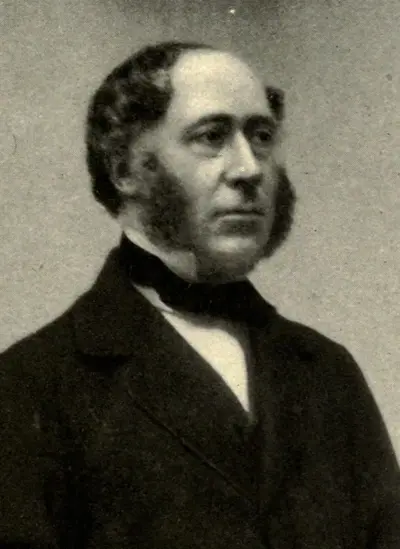
George Henry Moore was an Irish politician, co-founder in the 1850s of the Tenant Right League, of the Catholic Defence Association and, as the Member for Mayo in the United Kingdom Parliament, of the Independent Irish Party. Although an advocate of tenant rights, and renowned for his relief efforts during the Great Famine, at the time of his death in 1870 Moore was defending his rights as a landowner against an oath-bound tenant society, the Ribbonmen.
