Virginia Quotes
All militia officers shall have the authority to impress any smith...or other artificer, whatsoever, which shall be thought useful for the fixing of arms
Planting tobacco was a much more lucrative endeavour, so many of the few gunsmiths abandned that trade for tobacco farming.
Virginia Assembly, Law, 1705
Sourced by: Eigen's Political and Historical Quotations

The spelling was the original the in legislation passed by the Virginia Assembly Gunsmiths were ery few at the time. The South Carolina Province had only as single gunsmith and he was not very skilled. Planting tobacco was a much more lucrative endeavour, so many of the few gunsmiths abandned that trade for tobacco farming.
Plantng tobacco was a much more lucrative endeavour than fixing guns so many gunsmiths abandned that trade for tobacco farming.

The Factory had been established by the State of Virginia in 1775 to make guns. America filled with armed Americans in the Colonial era was a myth. Early America was not a gun culture. Guns were expensive, needed maintenance, took too long to reload, and were not as effective for most purposes as other weapons like hatchets and knives. American Colonial war was mostly hand to hand combat with relatively little shooting. Less than one fourth of the men joining Washington’s army owned guns. Gun factories could not survive for want of customers and gunsmiths went into other occupations. See {613052}. With the rebellion, it was critical to manufacture guns to arm the soldiers who had not their own. But the efforts like this were relatively feeble. The factory director who made not a single gun in over a year was then promoted to Commissary General of Munitions in the Continental Army. He was married to George Washington’s sister. He did however finance much of the munitions he procured with his own personal funds so made up in wealth and patriotism what he lacked in manufacturing skill.

The New England and Middle Atlantic States had recruited and allowed Negroes to serve in their divisions with excellent results. These two Southern states were suffering badly as a result of the British Military dominance and atrocities. Almost all whites who were patriots were already under arms. Hence the recommendation. Despite their precarious position, the Southern States would not follow the recommendation. Many were convinced that the Blacks would never make good soldiers, and the those Southerners who disagreed were terrified that once armed, the Blacks would never submit to slavery and would support slave insurrections of the Black slaves who were not in the military.

The perception of the necessity of slavery was evident very early in the South.

This required much of the population to maintain and bear arms. Another part of the law required the arms-bearers to be at the service of the king and as such was the king's militia.


In the early 18th century, things were very unsettled between Scotland & England with the succession of both countries in question. The result was the famous union of the two countries in 1707. At the time the Scottish Parliament wanted to intimidate the English as well as to be able to fend off English troops if things did not go well. The clause has much contemporary importance because it shows what a nation would do that wanted every man armed against powers which might restrict their freedom. The American Founding Fathers at the Constitutional Convention knew about this law. They even adopted other ideas from this law--{615975}. If the Founders had wanted every man armed as some modern gun control opponents maintain, they were brilliant drafters and would doubtless have written something like this. It supports the view that what was intended was not an armed nation but a nation where the states could organize “well ordered militias” and the Second Amendment resulted.

Although most American slaves were used in agriculture, the myth that Blacks were only fit for manual labor was debunked very early in American history. Despite that , it persisted to some racists to this day. The key then, as today, was education and training.

Indian and Black slaves were outlawed very early in Connecticut, not on moral grounds of concern for the Indians and Blacks, but because of the negative effects on the white poor. Why would anyone pay the poor any more than the amortization costs of a slave? Therefore there was no way a poor white could make a living wage if slavery were to coexist.

The white skilled laborers of the North were not the only ones who found slavery deleterious to their economic well being. The complaints to the Carolina legislature produced a finding as early as 1744 that whites were adversely affected.
This is yet another quotation demonstrating that the image of early America as a gun culture where most men were armed, skilled with those arms, and ready to come to the defense of the country. It turns out that none of the three corresponded to any historical reality for most Americans.

This quotation is referred to by these who debunk the myth that everyone was armed in early America. This was so on the frontier where there were potential Indian hostilities but in the rest of the country guns were not a part of everyday life or the culture. Even hunting was not that common an activity as raising cattle and farming was a much more reliable method of assuring a good food supply. The quotation is also often referred to in discussions regarding preparedness. This was an early example where the effect of peace and quiet was to diminish government budgetary commitment to military preparedness. . Floyd was very modern in his economic views, so much so that he, even as a Southern politician, opposed slavery on the grounds that it was economically inefficient and the South would never develop industrially if it had no incentive, as existed in the North and England, to reduce the amount of labor required for economic opportunity. He was right on that point as well.

This article was published under the name of “A Lover Of Peace” but is generally attributed to Paine. He was publishing in Pennsylvania which had a large Quaker, pacifist population and Paine was urging them to consider being armed.

Although many men were in uniform—many of them drafted, there were still others in civilian life. There was not enough manpower available for war material design and production since many men not in uniform worked at more lucrative jobs than war production jobs. The President wanted to draft men who were not fit for military service into war production service. Congress refused to go along with that solution. Fortunately and unexpectedly women moved into the production jobs in large numbers and needed military production was maintained without drafting war workers.


The image of early America where the new nation’s men were all skilled marksmen with a rifle was a myth as this quotation shows. It took much more skill to maintain and use a rifle as opposed to a musket. There were few gun makers in America at the time, and it was very difficult to rifle a steel barrel. As a result, rifles were quite expensive and few could afford them.

Ever since the Civil War, there has been an imbalance between the areas of the country with large unemployed populations and those areas where jobs were available. Even in 1870, the authorities were trying to get the unemployed to relocate but this was a hard thing to do at the time—physically, economically, and psychologically. It was not until the 2nd World War when huge numbers of Blacks migrated from areas of poor economic prospects in the South to areas of opportunity in the North. Also, note the classic welfare dilemma expressed whereby if humanitarian assistance is provided, people will not be desperate enough to move to areas with better opportunities.

He wrote it under the pseudonym of “The Pennsylvanian”.
depending on the term of the sentence Many criminals in England were sentenced to indentured servitude in America for a number of years depending on the crime.


One hundred years later, many in America would come to this same conclusion and American manufacturing, to outcompete China and other Oriental cultures, have turned to highly complex, constantly innovative, and technically advanced processes.

Washington was very unhappy with militia even from his native Virginia. See also {613030} This quotation is very important because the common belief is that all Americans in Colonial America were skilled with a gun and that there was a strong gun ownership culture. Many people quote {613057}. However, that was not the case as this and other research has shown. Less than one quarter of the Virginia militia had any weapon. Guns were expensive and only a minority of Americans could afford them. Despite the image of sharpshooters, and there were some, most guns were very inaccurate in the hands of most men.

While the militia had very few arms, Van Rensselaer had no military training and commanded a critical army because of his political connections—common at the time. After he botched the Battle of Queenston Heights he returned to politics but his military failure dogged him for the rest of his career. The quotation is yet another that illustrated the myth of all Americans armed and ready to fight for the nation. There was no gun culture then, and guns were expensive and a minority of Americans owned them. In this case less than 20 percent of the American militia owned a gun. And Congress would just not at the time spend the money for weapons.


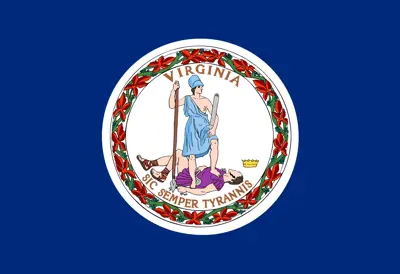
Virginia (/vərˈdʒɪniə/ (listen)), officially the Commonwealth of Virginia, is a state in the Mid-Atlantic and Southeastern regions of the United States, between the Atlantic Coast and the Appalachian Mountains. The geography and climate of the Commonwealth are shaped by the Blue Ridge Mountains and the Chesapeake Bay, which provide habitat for much of its flora and fauna. The capital of the Commonwealth is Richmond; Virginia Beach is the most-populous city, and Fairfax County is the most-populous political subdivision. The Commonwealth's estimated population as of 2019 is over 8.54 million, with 36% of them living in the Baltimore–Washington metropolitan area.
