Stephen Van Rensselaer III Quotes
I lament when I tell you, that neither arms, nor ammunition are provided for those brave men; no, not one musket to six men.... We are destitute of arms and ammunition; they are neither of them to be purchased in the country.
While the militia had very few arms, Van Rensselaer had no military training and commanded a critical army because of his political connections—common at the time. After he botched the Battle of Queenston Heights he returned to politics but his military failure dogged him for the rest of his career. The quotation is yet another that illustrated the myth of all Americans armed and ready to fight for the nation. There was no gun culture then, and guns were expensive and a minority of Americans owned them. In this case less than 20 percent of the American militia owned a gun. And Congress would just not at the time spend the money for weapons.
Stephen Van Rensselaer III, 1764-1893, New York Politician, Lieutenant Governor, & Militia Major General, Letter to NY Governor Daniel D. Tompkins after his abortive attempt to invade Canada, October 1812
Sourced by: Eigen's Political and Historical Quotations

The Factory had been established by the State of Virginia in 1775 to make guns. America filled with armed Americans in the Colonial era was a myth. Early America was not a gun culture. Guns were expensive, needed maintenance, took too long to reload, and were not as effective for most purposes as other weapons like hatchets and knives. American Colonial war was mostly hand to hand combat with relatively little shooting. Less than one fourth of the men joining Washington’s army owned guns. Gun factories could not survive for want of customers and gunsmiths went into other occupations. See {613052}. With the rebellion, it was critical to manufacture guns to arm the soldiers who had not their own. But the efforts like this were relatively feeble. The factory director who made not a single gun in over a year was then promoted to Commissary General of Munitions in the Continental Army. He was married to George Washington’s sister. He did however finance much of the munitions he procured with his own personal funds so made up in wealth and patriotism what he lacked in manufacturing skill.

There were military procurement problems in almost every war in which the United States has been engaged.

In the early 18th century, things were very unsettled between Scotland & England with the succession of both countries in question. The result was the famous union of the two countries in 1707. At the time the Scottish Parliament wanted to intimidate the English as well as to be able to fend off English troops if things did not go well. The clause has much contemporary importance because it shows what a nation would do that wanted every man armed against powers which might restrict their freedom. The American Founding Fathers at the Constitutional Convention knew about this law. They even adopted other ideas from this law--{615975}. If the Founders had wanted every man armed as some modern gun control opponents maintain, they were brilliant drafters and would doubtless have written something like this. It supports the view that what was intended was not an armed nation but a nation where the states could organize “well ordered militias” and the Second Amendment resulted.

Washington was very unhappy with militia even from his native Virginia. See also {613030} This quotation is very important because the common belief is that all Americans in Colonial America were skilled with a gun and that there was a strong gun ownership culture. Many people quote {613057}. However, that was not the case as this and other research has shown. Less than one quarter of the Virginia militia had any weapon. Guns were expensive and only a minority of Americans could afford them. Despite the image of sharpshooters, and there were some, most guns were very inaccurate in the hands of most men.


This quotation is noteworthy for two reasons. First, it shows the ineptness of the Continental Congress and the tendency not to want to spend money on the military even in a crisis. America really did not enthusiastically appropriate money for military until WWII and since then, military spending has dominated the American Federal budget. The second reason is that it shows the myth that Colonial America was full of men each armed with their gun and Americans were expert at using them. Most of the men joining Washington’s Army did not own a gun and had little or no skill with guns. See {613056}. Early America was not a gun culture. Guns were expensive, needed maintenance, took too long to reload, and were not as effective for most purposes as other weapons like hatchets and knives. American Colonial war was mostly hand to hand combat with relatively little shooting.

At the time, English ordinary citizens were not allowed to have firearms, but exception was made for the colonists. “Stands” were y-shaped sticks that the gun would rest on as the weight was about 20 pounds.
This is yet another quotation demonstrating that the image of early America as a gun culture where most men were armed, skilled with those arms, and ready to come to the defense of the country. It turns out that none of the three corresponded to any historical reality for most Americans.


She advocated armed self-defense for Blacks.

He later provided a copy to Hezekiah Niles, February 5, 1819 which is the source of the quotation since Henry never mentioned it.


This quotation is very controversial among historians. Beverly was in a sense the first American historian, although he had no formal training. His extolling the military and sharpshooting virtues of his fellows may or may not have been an exaggeration both as to their skill with firearms and their ability as soldiers. There is much evidence that only a minority of the people of Virginia possessed firearms at the time yet Beverly’s image is the one that has come down to us in the romanticized view of early America. Even fellow Virginian, George Washington {613056} complained that his Virginia civilians made poor soldiers compared with “regulars” who had been trained to shoot, and when Virginia militia reported for duty less than one quarter had firearms which were very expensive and not very accurate at the time.

The Congress did not believe that there would be war. Six weeks later Germany invaded Poland.

Even allowing for a certain amount of exaggeration, it is clear that there were many Americans who were personally armed in this period.

This quotation is often provided by historians studying the gun culture of America. Even conservatives like Ames did not see a gun or an armed citizenry as important to America’s survival or well being. Contrary to popular belief, even the State Militias’ whose rights to bear arms was written into the Second Amendment did not bother to do so. In 1803 only three state militias had rifle companies. Firearms of the time were expensive, difficult to maintain, and hard to use. Unless one needed them for defense, it was too much of a bother. Even in the aftermath of the War of 1812 only 30% of Massachusetts adult men owned guns; by 1839, the rate was below 10%. It was on the frontier where guns were popular and necessary. See {613080}.

1st Baron Verulam. The word “estate’ meant a political unit or subunit. These might be ruled by kings, dukes, war lords, etc. However, Bacon’s point was all armaments and the physical trappings of war are relatively minor when compared to the qualities of the population. With modern technology, this principle has become less and less true. Given the same technology in war, the outcome will depend on the human qualities and warlike disposition of the humans. However, a modern force with modern equipment and weapons can defeat an enemy of braver and more warlike disposition which does not have the same technology. In the modern world, a number of cultures find this a very distressing reality. The noble and courageous man should win, but Western technology, many complain, is undermining the old, traditional virtues.


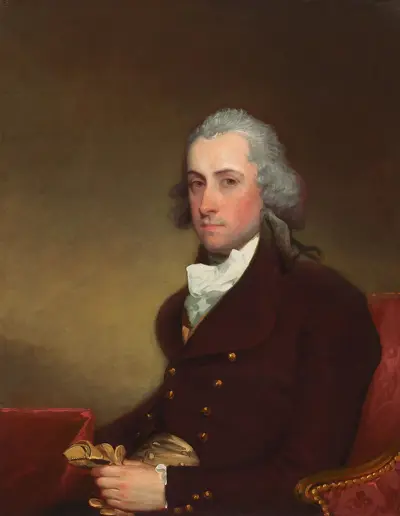
Stephen Van Rensselaer III was a New York landowner, businessman, militia officer, and politician.
