Pennsylvania Quotes
The people have a right to bear arms for the defense of themselves and the State; and as standing armies in time of peace are dangerous to liberty, they ought not to be kept up. And the military should be kept under strict subordination to, and governed by the civil power.
Pennsylvania, Constitution of 1776
Sourced by: Eigen's Political and Historical Quotations

The first clause is exactly that used by the state of Pennsylvania in its constitution. These had no reference to the militia as did the Virginia Bill of Rights and later the Federal Constitution.

President James Madison expressed a similar sentiment in his first inaugural address.

Note the phrase “well regulated militia.” This is the exact same phrase which the Founding Fathers chose to use in the Second Amendment of the Bill of Rights over a decade later. And in this amendment the right to bear arms is provided for the “well regulated militia” and not for individuals as the Supreme Court has ruled many times. This quotation shows that the phrase was not just drafted by the founders, but had a clear and established meaning of which they were aware. Many people think that the phrase did not have a known meaning at the time but this quotation shows differently as the Constitutions of all the States were available to and studied by the Congress and most educated people.


It would be more than a decade before the phrase “well regulated militia” would be added into the Constitution as the 2nd Amendment of the Bill of Rights. This resolution was the last of several passed at this meeting by which Maryland endorsed resistance to the British. So these resolations would have been widely distributed throughout the colonies and known by the leaders. In 1788 Alexander Hamilton Published Federalist 29 which also used the phrase. (See {588393}.) Then on September 25, 1789, the Congress proposed the Bill of Rights and the 2nd Amendment using the same key phrase, “well regulated militia.” Whether the drafters of the 2nd Amendment got the phrase from Hamilton’s Federalist 29 or from the Maryland Resolutions is not known but Hamilton’s was much more current. Did he get the phrase from Maryland? Did Congress get it from him? Did Maryland originate the phrase or was there an earlier use that influenced the Maryland drafters? At this point no one is sure, but the phrase is critical to the meaning of the 2nd Amendment because the Supreme Court has repeatedly held that the Second Amandment does not apply to individuals but only to the State’s right to bear arms within the “well regulated militia” and not as individual citizens. The right is that of the State government and that is why a state can control guns including banning them if they choose. So an individual in America does not have the constitutional right to bear arms. He may have a state constitutional right but in other states he may not use a gun in certain places and may not possess certain types of guns like hand guns which are illegal in New York, Washington DC and some other places.


In the early 18th century, things were very unsettled between Scotland & England with the succession of both countries in question. The result was the famous union of the two countries in 1707. At the time the Scottish Parliament wanted to intimidate the English as well as to be able to fend off English troops if things did not go well. The clause has much contemporary importance because it shows what a nation would do that wanted every man armed against powers which might restrict their freedom. The American Founding Fathers at the Constitutional Convention knew about this law. They even adopted other ideas from this law--{615975}. If the Founders had wanted every man armed as some modern gun control opponents maintain, they were brilliant drafters and would doubtless have written something like this. It supports the view that what was intended was not an armed nation but a nation where the states could organize “well ordered militias” and the Second Amendment resulted.


More than a decade before Hamilton wrote this, a Maryland commission used the phrase “well regulated militia” earlier. (See {588394}.) It would be less than 2 years before the phrase “well regulated militia” would be added into the Constitution in the 2nd Amendment of the Bill of Rights—September 25, 1789. The Maryland resolution was the last of several passed at a meeting by which Maryland endorsed resistance to the British before the actual Revolution. So these resolations would have been widely distributed throughout the colonies and known by the leaders. Whether the drafters of the 2nd Amendment got the phrase from Hamilton’s Federalist 29 or from the Maryland Resolutions is not known but Hamilton’s was much more current. Did he get the phrase from Maryland? Did Congress get it from him? Did Maryland originate the phrase or was there an earlier use that influenced the Maryland drafters? At this point no one is sure, but the phrase is critical to the meaning of the 2nd Amendment because the Supreme Court has repeatedly held that the Second Amandment does not apply to individuals but only to the State’s right to bear arms within the “well regulated militia” and not as individual citizens. The right is that of the State government and that is why a state can control guns including banning them if they choose. So an individual in America does not have the constitutional right to bear arms. He may have a state constitutional right but in other states he may not use a gun in certain places and may not possess certain types of guns like hand guns which are illegal in New York, Washington DC and some other places.


Washington was very unhappy with militia even from his native Virginia. See also {613030} This quotation is very important because the common belief is that all Americans in Colonial America were skilled with a gun and that there was a strong gun ownership culture. Many people quote {613057}. However, that was not the case as this and other research has shown. Less than one quarter of the Virginia militia had any weapon. Guns were expensive and only a minority of Americans could afford them. Despite the image of sharpshooters, and there were some, most guns were very inaccurate in the hands of most men.


She lost by a wide margin. Her Democratic opponent was not for gun control and yet she campaigned heavily on it but it was no issue in Nevada at that time.


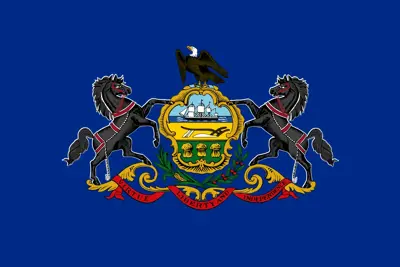
Pennsylvania (/ˌpɛnsəlˈveɪniə/ (listen) PEN-səl-VAY-nee-ə) (Pennsylvania German: Pennsilfaani), officially the Commonwealth of Pennsylvania, is a state in the Mid-Atlantic, Northeastern, and Appalachian regions of the United States. The Commonwealth is bordered by Delaware to the southeast, Maryland to the south, West Virginia to the southwest, Ohio to the west, Lake Erie and the Canadian province of Ontario to the northwest, New York to the north, and New Jersey to the east, while the Appalachian Mountains run through its middle.
