Virginia Quotes
Gunsmiths and other artisans shall [henceforth] be compelled to worke at theire trades and [are] not suffered to plant tobacco or corne or doe any other worke in the ground.
The spelling was the original the in legislation passed by the Virginia Assembly Gunsmiths were ery few at the time. The South Carolina Province had only as single gunsmith and he was not very skilled. Planting tobacco was a much more lucrative endeavour, so many of the few gunsmiths abandned that trade for tobacco farming.
Virginia Assembly, Law, 1633
Sourced by: Eigen's Political and Historical Quotations

Plantng tobacco was a much more lucrative endeavour than fixing guns so many gunsmiths abandned that trade for tobacco farming.
Planting tobacco was a much more lucrative endeavour, so many of the few gunsmiths abandned that trade for tobacco farming.

This quotation illustrates the fact that there was, contrary to popular myth, no gun culture in Colonial America. Few Americans could afford guns which cost 2 to 3 months wages of a skilled worker. And there were few guns available as there was not a single gun manufacturer in Colonial America. Gunsmiths would come over from England and find that business was terrible as most Americans did not own guns and they were not part of the culture other than the fact that they were status symbols as they were so costly. The gunsmiths would find that they could do better economically by farming and left their trade. Meanwhile, the legislature, like most in America at the time was concerned that if there were trouble with the Indians there would not be enough guns for defense. The guns then were in frequent need of repairs and there were too few gunsmiths. Thus the law. It didn’t work and so in 1662 they tried tax exemptions for gunsmiths which also didn’t work and they went back to fines.


The nation was divided over the issue of immigration. Many observed that the vast majority of the immigrants—especially the illegal immigrants performed jobs for which American workers could not be hired. Opponents like the congressman, claimed that if better wages were paid Americans would be doing the jobs, and as long as there were immigrants who would work for low wages, there was little reason for employers to pay more.


This is one of the favorite quotations of students of labor relations. The Black Plague, which raged in Europe from 1347 to 1349, had left relatively few able bodied people alive. Given this shortage of labor, the price that workers could command rapidly increased. The wealthy were outraged that the law of supply and demand and the marketplace produced such a labor inflations and the king then passed this draconian decree that in effect was one of the early attempts at wage control. It went further in that the workers were required to work for the official wages and had no choice of not working at all. In effect, labor was drafted. See {611124} and {611126}


There is a , romantic American myth about the Militiamen in Colonial and Revolutionary America—the citizen soldiers who would leave their farms and rise to the military necessity of the day. However, not only were the militia very hard to muster to duty, but most actually didn’t own or have experience with firearms, and the prevailing opinion of knowledgeable military leaders from George Washington on down was that the militia were not very good soldiers. See {613015}, {613016}, {613022}, {613027}, {621987}, {621988}, {613030}, {613033}, & {613056}.


The Factory had been established by the State of Virginia in 1775 to make guns. America filled with armed Americans in the Colonial era was a myth. Early America was not a gun culture. Guns were expensive, needed maintenance, took too long to reload, and were not as effective for most purposes as other weapons like hatchets and knives. American Colonial war was mostly hand to hand combat with relatively little shooting. Less than one fourth of the men joining Washington’s army owned guns. Gun factories could not survive for want of customers and gunsmiths went into other occupations. See {613052}. With the rebellion, it was critical to manufacture guns to arm the soldiers who had not their own. But the efforts like this were relatively feeble. The factory director who made not a single gun in over a year was then promoted to Commissary General of Munitions in the Continental Army. He was married to George Washington’s sister. He did however finance much of the munitions he procured with his own personal funds so made up in wealth and patriotism what he lacked in manufacturing skill.

Although most American slaves were used in agriculture, the myth that Blacks were only fit for manual labor was debunked very early in American history. Despite that , it persisted to some racists to this day. The key then, as today, was education and training.

The perception of the necessity of slavery was evident very early in the South.


This is surprising to most Americans who thought that the Communists would have been afraid to allow citizens to have guns. Some American gun advocates have wanted laws to require∫∫ all people in an area to own guns. Ironically, they have no use for Communists and would find it amazing that the Communists agreed with them while most of America did not. This Article of the Russian Constitution of 1918 is used by gun control advocates to prove that the oft claimed “fact” that only free governments dare to allow their citizens to be armed is not a fact at all. but just another false generalization. Other modern counterexamples are many of the Arab dictatorial nations also allow their population to be armed. The tradition is so strong that the tyrants dare not try and disarm the population.

This article was published under the name of “A Lover Of Peace” but is generally attributed to Paine. He was publishing in Pennsylvania which had a large Quaker, pacifist population and Paine was urging them to consider being armed.

One hundred years later, many in America would come to this same conclusion and American manufacturing, to outcompete China and other Oriental cultures, have turned to highly complex, constantly innovative, and technically advanced processes.

This is the same man who introduced the Stamp Act 12 years before which started the whole problem in America. See {74956}.

Ever since the Civil War, there has been an imbalance between the areas of the country with large unemployed populations and those areas where jobs were available. Even in 1870, the authorities were trying to get the unemployed to relocate but this was a hard thing to do at the time—physically, economically, and psychologically. It was not until the 2nd World War when huge numbers of Blacks migrated from areas of poor economic prospects in the South to areas of opportunity in the North. Also, note the classic welfare dilemma expressed whereby if humanitarian assistance is provided, people will not be desperate enough to move to areas with better opportunities.
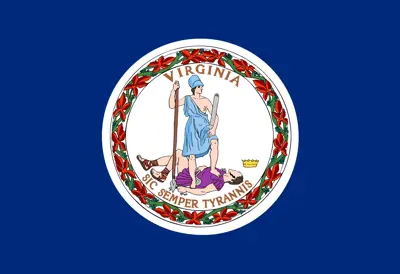
Virginia (/vərˈdʒɪniə/ (listen)), officially the Commonwealth of Virginia, is a state in the Mid-Atlantic and Southeastern regions of the United States, between the Atlantic Coast and the Appalachian Mountains. The geography and climate of the Commonwealth are shaped by the Blue Ridge Mountains and the Chesapeake Bay, which provide habitat for much of its flora and fauna. The capital of the Commonwealth is Richmond; Virginia Beach is the most-populous city, and Fairfax County is the most-populous political subdivision. The Commonwealth's estimated population as of 2019 is over 8.54 million, with 36% of them living in the Baltimore–Washington metropolitan area.
