Benjamin Franklin Quotes
A plural Legislature is as necessary to good Government as a single Executive. It is not enough that your Legislature should be numerous; it should also be divided. Numbers alone are not a sufficient Barrier against the Impulses of Passion, the Combinations of Interest, the Intrigues of Faction, the Haste of Folly, or the Spirit of Encroachment. One Division should watch over and control the other, supply its Wants, correct its Blunders, and cross its Designs, should they be made up of the Portions of Sense and Knowledge which each Member brings to it.
Benjamin Franklin, 1706-1790, Member of the Continental Congress & the Constitutional Convention, Governor of Pennsylvania, President of the Pennsylvania Assembly, U.S. Minister to France, Postmaster General of the American Colonies, Queries and Remarks respecting Alterations in the Constitution of Pennsylvania, 1789
Sourced by: Eigen's Political and Historical Quotations


The Congress and most of the State Legislatures are bicameral (two houses). Nebraska has only a unicameral (one house) legislature.

This was the President’s original role regarding legislation. However, in the 20th century, Presidents have become more active and suggest laws and often initiate the process and then end it by signing the law that he suggested and shepherded through the Congress. But this was never the vision of the Founding Fathers, but since it is not addressed in the Constitution is not an unconstitutional process.

With a legislature of two houses, both have to agree to any change in order for it to take effect. This is always harder to do than to have change voted by a single legislative body.


President Abraham Lincoln had pocket vetoed his own party's reconstruction bill in the midst of an election year.


This was written shortly before he assumed the crown.


A veto power for the President would be absurd because

This was published after he died.

This constitution was written 7 years before the national constitutional convention. It shows that there was concern about the separation of powers in United States even before the Constitution was drafted. See {616750} for an even clearer statement of the separation of powers principle.


In most legislatures, the leader of the majority party can usually prevent any proposed legislation from coming to a vote. Many will use that individual power to block any legislation that they do not support. Others like Skelos believes that democracy requires that the entire legislature have the opportunity to vote on an issue and that a single individual or even a majority of the majority should not be able to block a vote as this would disenfranchise the legislators. In this case, the bill was to legalize Gay Marriage—a very controversial proposal. When the vote was taken, 4 Republicans and all but one Democrat voted in favor. The other Republicans and the one Democrat voted against. The bill passed and New York became the first large state to legalize Gay Marriage. Skelos, who opposed the bill, was castigated by conservatives of his own party for not using his power to prevent the vote from ever happening, and putting principle above party.
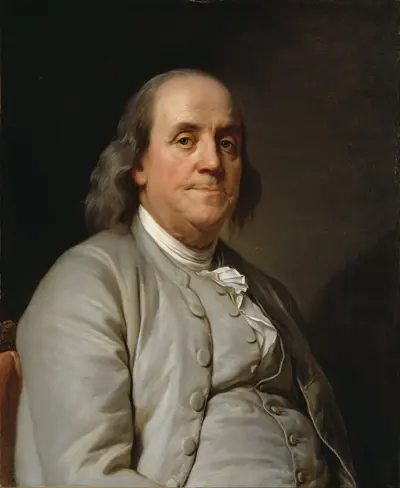
Benjamin Franklin FRS FRSA FRSE was one of the Founding Fathers of the United States. A polymath, he was a leading writer, printer, political philosopher, politician, Freemason, postmaster, scientist, inventor, humorist, civic activist, statesman, and diplomat. As a scientist, he was a major figure in the American Enlightenment and the history of physics for his discoveries and theories regarding electricity. As an inventor, he is known for the lightning rod, bifocals, and the Franklin stove, among other inventions. He founded many civic organizations, including the Library Company, Philadelphia's first fire department, and the University of Pennsylvania.
