David Galula Quotes
A mimeograph machine may turn out to be more useful than a machine gun and clerks are more in demand than riflemen.
A mimeograph machine was an office duplicator before the invention of the Xerox machine. Galula fought in Algeria and other counterinsurgencies and then studied them. He wrote the classic book on counterinsurgency warfare. After all the mistakes the U. S. made after the successful invasion of Iraq, his book and doctrine were very influential in the change in strategy and tactics that turned the Iraq War in our favor.
David Galula, 1919–1967, French Military Officer, Warfare Scholar & Writer, Counter Insurgency Warfare: Theory & Practice, 1958
Sourced by: Eigen's Political and Historical Quotations

He fought in Algeria and other counterinsurgencies and then studied them. He wrote the classic book on counterinsurgency warfare. After all the mistakes the U. S. made after the successful invasion of Iraq, his book and doctrine were very influential in the change in strategy and tactics that turned the Iraq War in our favor.
He fought in Algeria and other counterinsurgencies and then studied them. He wrote the classic book on counterinsurgency warfare. After all the mistakes the U. S. made after the successful invasion of Iraq, his book and doctrine were very influential in the change in strategy and tactics that turned the Iraq War in our favor.

Socialist International Anthem. Also adopted by the Communists
He fought in Algeria and other counterinsurgencies and then studied them. He wrote the classic book on counterinsurgency warfare. After all the mistakes the U. S. made after the successful invasion of Iraq, his book and doctrine were very influential in the change in strategy and tactics that turned the Iraq War in our favor.
He fought in Algeria and other counterinsurgencies and then studied them. He wrote the classic book on counterinsurgency warfare. After all the mistakes the U. S. made after the successful invasion of Iraq, his book and doctrine were very influential in the change in strategy and tactics that turned the Iraq War in our favor.

The French manipulated the war news more than the other nations but nations all did to some extent tending to exaggerate the positive and minimize the negative.


Algeria was not a French Colony but an actual province of France where an Algerian had the same citizenship and rights of a Parisian or any other Frenchmen. However the Algerian nationalists combined with the Islamic extremists wanted independence and had started a revolutionary movement primarily using terrorism. Some members of the French Parliament were liberals who thought the Algerians had a right to self-determination and favored a plebiscite; others saw Algeria as a drag on France and were in favor of having it independent. But the majority at that time saw Algeria as a part of France and opposed a change of status. Many in the army however were afraid that the politicians would "sell out" and their sacrifices would have been in vain. This is a common pattern where parts of nations want independence and the military is asked to put down any violence and terrorism. Eventually, the cost in casualties and money became so great that the government did change and allowed Algerian independence—just what the General and many soldiers had feared. In retrospect, the sacrifices were in vain.


As the U. S. entered Baghdad during the Iraq War, the Information Minister continued to deny American success. This quotation illustrates a common Arab custom of greatly exaggerating military successes and grossly minimizing failures. Often, this would be done despite the fact that the people he was addressing knew full well that he was not being accurate. Every nation in military conflict tends to make minor adjustments with reality for propaganda purposes, but the Arab culture seems to do this to an extreme. In the 6 day war, the official Egyptian announcements said that they had destroyed much of the Israeli air force, at the same time that they were begging the United Nations to impose a cease fire and the Egyptians really knew that their entire air force had been destroyed and there were virtually no Israeli air losses. They also realized the world would know the truth in a day or so, yet they persisted in the absurd lie. Some scholars argue that for the Arab Culture oratory and language is poetry and describes hopes and ideals and not reality if it is unpleasant, but this theory is not universally accepted.

From the beginning, the issue of whether the country should have a standing army or depend on the militia and the citizen soldier has been controversial. There is a , romantic American myth about the Militiamen in Colonial and Revolutionary America—the citizen soldiers who would leave their farms and rise to the military necessity of the day. However, not only were the militia very hard to muster to duty, but most actually didn’t own or have experience with firearms, and the prevailing opinion of knowledgeable military leaders from George Washington on down was that the militia were not very good soldiers. See {613015}, {613016}, {613022}, {613027}, {621987}, {621988}, {613030}, {613033}, & {613056}

Washington was very unhappy with militia even from his native Virginia. See also {613030} This quotation is very important because the common belief is that all Americans in Colonial America were skilled with a gun and that there was a strong gun ownership culture. Many people quote {613057}. However, that was not the case as this and other research has shown. Less than one quarter of the Virginia militia had any weapon. Guns were expensive and only a minority of Americans could afford them. Despite the image of sharpshooters, and there were some, most guns were very inaccurate in the hands of most men.


Clark had commanded the American and NATO forces in the Serbian War where all the military and political objectives were accomplished with heavy losses to the Serbian’s and none to the allied side—what many think was the most successful war in American History. Like Eisenhower in WWII one great challenge for Clark was the political and strategic one of keeping the coalition of all the allied governments working together. His perspective had been like Eisenhower’s and other officer’s perspectives in history, which was much wider and geopolitical than the views of most military officers.

This issue of who has the wisdom and competency to determine policy in matters of war has been a constant one in most societies. Even in the Iraq war of the early 21st century, the Congress and the President argued as to what competence the Congress had to determine policy, strategy and tactics.

Ever since the end of WWII, no major war has been fought where there has been a classic victory where one nation is conquered by another and there is a surrender. Many of the wars have been fought against non-state actors or our war aim is a regime change or the establishment of a more friendly government. We have no desire to occupy the countries generally, and there is often no one “in charge” of the enemy who can even surrender. Bruce was referring to the Iraq War and the Afghanistan War. In each case, despite the lack of a surrender document, it can be said that America won both of these wars initially and then had great trouble with the occupation, the nation building, and keeping the peace. In Iraq and Afghanistan we suffered almost no casualties in the initial invasions. The occupation and “peace” is where we suffered almost all of our casualties.

Even in democratic America, this has been true. We spend almost any amount of money to give our military the weapons of war that will make them more effective soldiers, but when they return with mental and physical wounds, government money is not so easy to come by to preserve them in good health. Cost is a major consideration in Veterans benefits and care, but weapons expenditures have little restraint. It has been so for many years in many cultures.

He fought in Algeria and other counterinsurgencies and then studied them. He wrote the classic book on counterinsurgency warfare. After all the mistakes the U. S. made after the successful invasion of Iraq, his book and doctrine were very influential in the change in strategy and tactics that turned the Iraq War in our favor.

Ruling group of France during the French Revolution. The purchase and transportation of an army in the field was a very expensive element of war and was very difficult as well. The Directory urged its generals to live off the land and get their food from the enemy country they were invading. Rarely did they pay for it but typically just took it from the civilians. Napoleon who served under the directory took this principle one step further. He also stole the invaded country’s art—paintings and statues mostly. These he sent back to Paris where they were sold to rich people. This way he could pay the salaries of the troops and buy more weapons and ammunition. Napoleon could conquer so much territory because France did not have to pay for the military effort as other countries did. This is one of the major reasons for example that the Louvre Museum in Paris has so many great Italian and Spanish paintings.
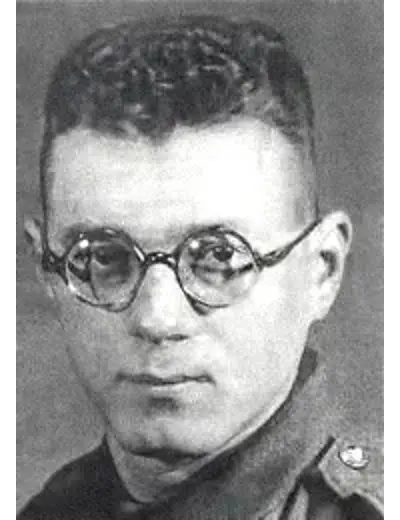
David Galula (1919–1967) was a French military officer and scholar who was influential in developing the theory and practice of counterinsurgency warfare.
