C. S. Lewis Quotes
A man may have to die for our country: but no man must, in any exclusive sense, live for his country. He who surrenders himself without reservation to the temporal claims of a nation, or a party, or a class is rendering to Caesar that which, of all things, most emphatically belongs to God: himself.
Lewis, C. S. "Learning in War-Time." The Weight of Glory and Other Addresses, Macmillan, 1980, p. 46.


Karsh was arguing that Arab citizens of Israel should be required to serve in the Israeli army and fight against other Arabs who have repeatedly attacked Israel. The Israeli tradition has been not to require Arab citizens to fight against what might be their own relatives. Karsh and others argue that Italian-Americans fought against other Italians in WWII, German-Americans fought against Germans.


See Carl Schurz {33636} for an 1872 version and G. K Chesterton for perspective {597471}.


In a House debate in 1923 on the Nordic or Latin discovery of America, Congressman Summers of Washington asked Italian-American Congressman La Guardia to yield to ask whether or not Christopher Columbus had come from "your country."


At the time the Algerians leading the impendence movement were very secular, and were committed to modernity, multiculturalism and religious freedom and tolerance. Within Algerian Muslim society, there has been a constant battle against the right wing Islamic extremists and terrorists.


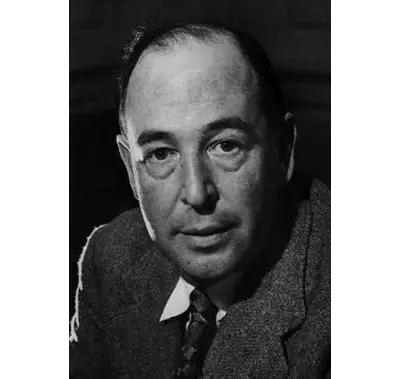
Clive Staples Lewis was a British writer and lay theologian. He held academic positions in English literature at both Oxford University (Magdalen College, 1925–1954) and Cambridge University (Magdalene College, 1954–1963). He is best known for his works of fiction, especially The Screwtape Letters, The Chronicles of Narnia, and The Space Trilogy, and for his non-fiction Christian apologetics, such as Mere Christianity, Miracles, and The Problem of Pain.
