Graham Greene Quotes
I don't care a damn about men who are loyal to the people who pay them, to organizations...I don't think even my country means all that much. There are many countries in our blood, aren't there, but only one person. Would the world be in the mess it is if we were loyal to love and not to countries?
Greene, Graham. Our Man in Havana. William Heinemann, 1958.


For variations on this theme see Stephen Decatur, Meyer London, John Jordan Crittendon and Carl Schurtz


In a House debate in 1923 on the Nordic or Latin discovery of America, Congressman Summers of Washington asked Italian-American Congressman La Guardia to yield to ask whether or not Christopher Columbus had come from "your country."


The motto was worn on their uniforms which unlike the blue of the rest of the American army was white as can be seen in the famous paining by muralist David R. Wagner. Rhode Island offered freedom to all slaves who would enlist. It not only included Negroes but Indian slaves as well. See {613949} and {614120} for details. The motto itself is interesting in that there was little concept of a country then as most Americans identified themselves as Virginians, New Yorkers or Rhode Islanders. There was no Constitution—only a confederation of States. But the former slaves joining the regiment had never voluntarily associated themselves with Rhode Island, and the first free decision they made was to join the regiment and have a new country.


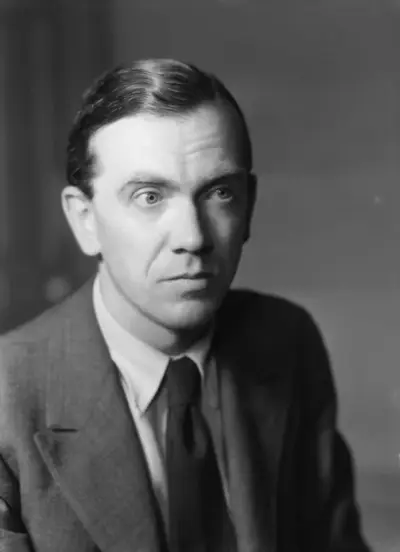
Henry Graham Greene OM CH was an English writer and journalist regarded by many as one of the leading English novelists of the 20th century. Combining literary acclaim with widespread popularity, Greene acquired a reputation early in his lifetime as a major writer, both of serious Catholic novels, and of thrillers (or "entertainments" as he termed them). He was shortlisted, in 1966 and 1967, for the Nobel Prize for Literature. Through 67 years of writing, which included over 25 novels, he explored the ambivalent moral and political issues of the modern world.
