Albert J. Nock Quotes
As a general principle, I should put it that a man's country is where the things he loves are most respected. Circumstances may have prevented his ever setting foot there, but it remains his country.
Nock, Albert J. Memoirs of a Superfluous Man. Harper & Brothers, 1943, p. 317.


For variations on this theme see Stephen Decatur, Meyer London, John Jordan Crittendon and Carl Schurtz


In a House debate in 1923 on the Nordic or Latin discovery of America, Congressman Summers of Washington asked Italian-American Congressman La Guardia to yield to ask whether or not Christopher Columbus had come from "your country."

The motto was worn on their uniforms which unlike the blue of the rest of the American army was white as can be seen in the famous paining by muralist David R. Wagner. Rhode Island offered freedom to all slaves who would enlist. It not only included Negroes but Indian slaves as well. See {613949} and {614120} for details. The motto itself is interesting in that there was little concept of a country then as most Americans identified themselves as Virginians, New Yorkers or Rhode Islanders. There was no Constitution—only a confederation of States. But the former slaves joining the regiment had never voluntarily associated themselves with Rhode Island, and the first free decision they made was to join the regiment and have a new country.


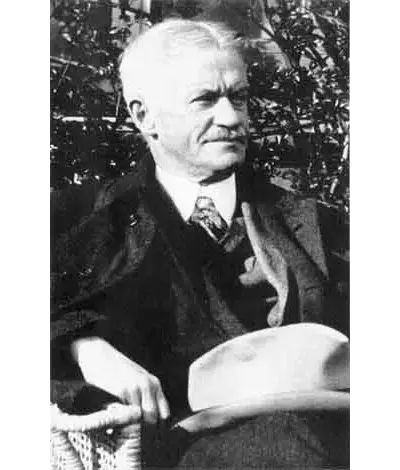
Albert Jay Nock was an American libertarian author, editor first of The Freeman and then The Nation, educational theorist, Georgist, and social critic of the early and middle 20th century. He was an outspoken opponent of the New Deal, and served as a fundamental inspiration for the modern libertarian and conservative movements, cited as an influence by William F. Buckley Jr. He was one of the first Americans to self-identify as "libertarian". His best-known books are Memoirs of a Superfluous Man and Our Enemy, the State.
