Walter Scott Quotes
A great part of the law of nations stands upon the usage and practice of nations.
Walter Scott, 1771-1832, Scottish Writer, "The Flad Oyen", 1799
Sourced by: Eigen's Political and Historical Quotations

This is a point of view of International law that while in the minority the world over, is quite popular among American conservatives and extreme liberals. Namely that while a government may decide to conform to something called for in “international law”, there is no obligation to continue to do so. A sovereign nation may not relinquish its sovereignty. The United States Constitution may not be waived by an American government. They irony here is that like most modern nations, we want the benefits of certain international laws, like the Law of the Seas, we do not want to be bound by others like the Rights of the Child or the World Court. Theory and practice are often at odds in this area.


At the outbreak of the Civil War the President maintained that the United States was not at war with another nation but was merely putting down a rebellion. When he then ordered a blockade of Southern ports, he was legally blockading his own country. See Thaddeus Stevens.


Individual countries are bound only by the treaties and compacts that they have signed and ratified. So very often someone will allege that a country has violated international law, but that nation may not have signed the Treaty or Compact that binds them, so thy may not be in violation at all whereas some other country in similar circumstances would be. Also, many countries (including the United States) sign treaties but take exception to some of the provisions. Then there are not bound by that provision. This is what makes International Law so complicated and difficult to understand.


This quotation is very frequently misattributed to Albert Einstein as it was published in an interview with the great physicist. However, in the conversation, Einstein attributed it to Montague.

Bolton had an idealistic view of the sanctity of treaties. For a more sophisticated “realpolitic” view, see {138034} .
Act of Chapultepec. The United States was among the signers.


The United States Senate must ratify all treaties before they can become effective. The Senate has been very reluctant to ratify treaties where the U. S. government or any of its citizens could come under the jurisdiction of any legal entity which did not abide by all the rights citizens are guaranteed by the U. S. Constitution. As a result, we do not recognize the World Court and the Treaty of Rome for example. The latter is the one that gives the World Court jurisdiction over a high level official who commits war crimes even in his own country. The result is that many dictators who do not want to be constrained by international law, do not sign the treaty fending off any pressure to do so by pointing to the United States. But Rothkopf and others who agree with him have not yet been able to come up with a mechanism that will assure American Constitutional rights to Americans who might be involved with the World Court and allow the court to punish the dictators who abuse their own population. The French would like their laws and constitution to control. The Russians, theirs. The Chinese, theirs. Every American public official takes an oath to defend The Constitution. That is their primary duty. Foreign policy and punishing international war criminals must take a lower priority.
There is no court structure that handles International law disputes. There are some international bodies that hear some types of international law disputes, but no general mechanism. The procedures of these few bodies are very complex and arcane. But worse, there is no body with any power that can enforce any decision that may be reached. Enforcement depends on the good will of the nations involved or the pressure that can be brought to bear by other counties.


Prior to that the accepted phrase was “Law of Nations,” but soon after Bentham first used “International Law” it caught on and became widespread in the English Language. See Columbia Law Review, Vol. 5, No. 2, February 1905
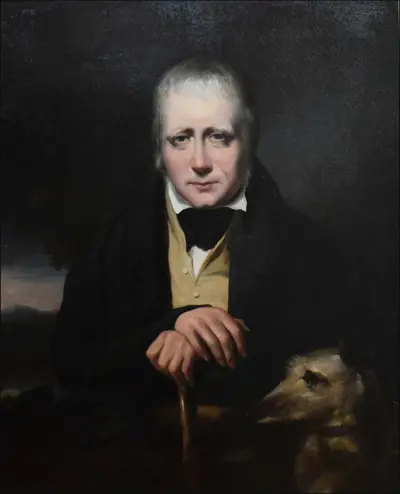
Sir Walter Scott, 1st Baronet FRSE FSA Scot was a Scottish historical novelist, poet, playwright, and historian. Many of his works remain classics of both English-language literature and Scottish literature. Famous titles include The Lady of the Lake (narrative poem) and the novels Waverley, Old Mortality (or The Tale of Old Mortality), Rob Roy, The Heart of Mid-Lothian, The Bride of Lammermoor, and Ivanhoe.
