Noam Chomsky Quotes
The U.N. charter bars the threat of force.
Chomsky, Noam. Making the Future: Occupations, Interventions, Empire and Resistance. City Lights Books, 2012, p. 45.

Son of John Jay. Father of Harriet Beecher Stowe and Henry Ward Beecher


Actually it was the United States which insisted in the veto which required consensus of the great powers of the time. It was Russia which ended up using it far more often than any other nation.


Ingersoll was considered to be the greatest orator and political thinker of his day, but his overt atheistic views curtailed his elected political career. Ever since the founding of our republic, the concept of a World Court has been polarizing. In the early days of the nation, many Americans did not trust the more powerful European states to be fair. When we became the most powerful state, many of us didn’t trust the weaker nations to be fair and maintain our standards of law.


He used the “united nations” as a general description as the UN had not been created or named yet, However, as this quotation demonstrates, the President was already thinking about a UN idea, but as a realist, he explained that the great powers had to come to some agreement of interests. Actually China and France, at the time, would go along with whatever the United States and Britain wanted to do and had a great common interest, and there was already a strong association of interests between Britain and America. Russia was to be the problem and a complete common interest was never to be, but there was enough to get the United Nations started.


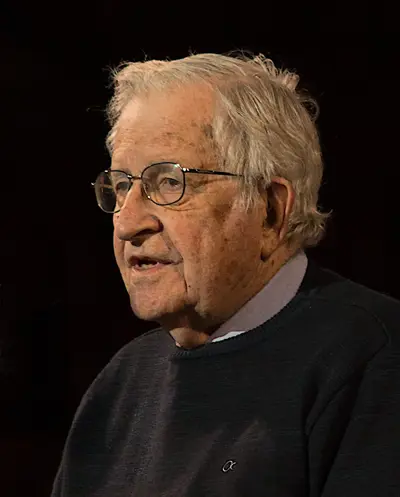
Avram Noam Chomsky is an American linguist, philosopher, cognitive scientist, historian, social critic, and political activist. Sometimes called "the father of modern linguistics", Chomsky is also a major figure in analytic philosophy and one of the founders of the field of cognitive science. He is Laureate Professor of Linguistics at the University of Arizona and Institute Professor Emeritus at the Massachusetts Institute of Technology (MIT), and is the author of more than 150 books on topics such as linguistics, war, politics, and mass media. Ideologically, he aligns with anarcho-syndicalism and libertarian socialism.
